
Real News from RealNex

Building a Predictable CRE Deal Pipeline: What Top Brokers Do Differently

Posted by RealNex on Sep 2, 2026, 8:00:02 AM

One of the more frustrating parts of commercial real estate is how uneven the pipeline can feel. Some weeks, your calendar is packed with calls, tours, and negotiations. Then, suddenly and without warning, things go quiet, and you find yourself wondering whether deals are actually slowing down, or if they’re just stuck somewhere in the middle.

If you’ve been in the industry for any length of time, you’ve likely experienced something similar. Most brokers have. The ones who seem more consistent, however, usually aren’t relying on luck or chance. They’re paying closer attention to what’s happening before a deal becomes active.

The Best Pipelines Are Built Earlier Than People Think

A predictable pipeline doesn’t start when someone calls to tell you they’re ready to buy or sell real estate. By then, the process is already in motion. The brokers who stay busy tend to spend more time watching for signals before opportunities become obvious to everyone else. If you look around, you’ll notice that ownership changes, loans mature, and leases expire all the time. And while none of these guarantees a deal, together, they help you see where future movement is more likely.

Even today, a lot of prospecting still happens reactively. You see it all the time — someone lists a property, and then suddenly everyone jumps at once. On the other hand, some of the strongest brokers are spending more energy figuring out who may need to make a decision 6 months from now (not 6 days from now).

Tracking Matters More Than You May Think

There’s also a practical side to all of this that often gets overlooked. Once you’re talking to enough people consistently, it becomes difficult to remember everything without having a system in place behind it. Most stalled pipelines aren’t actually empty; they’re just unorganized.

A prospect who may have sounded promising 3 months ago disappears because no one followed up with him. Another conversation got buried in your inbox for so long that you forgot about it. A potential seller asks you to check back in with him after the first of the year, but you never did. Sound familiar? We thought so.

Individually, those don’t seem like major misses (and, in many cases, they’re not). However, over time, these kinds of things are usually what make the difference between a pipeline that feels steady and one that feels unpredictable.

Not Every Prospect Deserves the Same Energy

One thing experienced brokers are really good at is separating activity from opportunity. Ask anyone who’s been in the business, and they’ll tell you that some prospects respond quickly, ask thoughtful and detailed questions, and keep moving. Others may sound interested at first, but then they never really progress. What really slows you down is treating both of these the same.

Of course, that doesn’t mean to give up on slower conversations entirely. It just means taking the time to recognize where deal momentum exists, and where it probably doesn’t. A lot of brokers waste time chasing deals, spinning their wheels on deals that were never especially active to begin with. Meanwhile, there are other stronger opportunities just around the corner that sit untouched, simply because they don’t seem urgent yet.

This is why it is so important to prioritize your prospects. Not every lead needs immediate attention, but the ones that are showing real movement often need faster follow-up than you may think.

You can Usually Tell When a Deal is Slipping

Most deals don’t suddenly disappear; rather, they often drift away slowly. Your prospect starts taking longer to reply to your emails, meetings keep getting rescheduled, or decisions that should take a couple of days start to take a couple of weeks. The tricky part here is that often, you can sense this before you want to acknowledge it.

The smart brokers, however, pay attention to those changes early instead of just assuming that things will pick back up eventually. Sometimes that means simply changing strategy; other times, it means the deal isn’t as active as you hoped. Recognizing the difference early on saves you more time than you might think.

Why Better Visibility Changes the Pipeline

A predictable pipeline has more to do with visibility than volume. If you can clearly see where your prospects stand, which deals are currently active, and which conversations have gone quiet, it becomes easier for you to focus your energy where it actually matters.

That’s part of why integrated systems have become so important in commercial real estate. Platforms like RealNex help you keep prospect activity, deal tracking, and outreach connected and living in one place, which makes it easier for you to spot patterns before an opportunity falls through the cracks.

RealNex is a CRM tool that can be used by commercial real estate professionals to work more efficiently and improve their productivity. At RealNex, we offer an incredibly powerful, yet amazingly simple, end-to-end solution. To learn more about RealNex and see samples of the products that we offer, visit our website. When you are ready to experience the RealNex difference for yourself, schedule a demo or contact us today. We’d love to talk with you!
Read More

Topics: CRE, CRE Tech, CRM, Real Estate Technology, CRE Marketing, proptech

Beyond the Deal: How CRE Brokers Build Long-Term Client Relationships

Posted by RealNex on Aug 19, 2026, 8:00:02 AM

A lot of people get into commercial real estate thinking that the business is mostly about transactions: find the deal, close it, and then move on to the next one. While deals matter (obviously), if you talk to brokers who have been doing this for a long time, most of them will tell you the same thing: the real value tends to come afterward. And not immediately afterward, sometimes even years later.

One client turns into another deal and then a referral. Then it’s a call out of the blue because someone expanded their business, or changed their investment strategy, and they simply remembered who stayed in touch even after the deal was signed.

That’s the part of brokerage that doesn’t get talked about as much as it should, even though it’s usually what separates short-term activity from a long-term deal.

The Relationship Doesn’t End When the Deal Closes

This sounds obvious, but a surprising number of client relationships quietly disappear once the transaction is complete. Not intentionally, of course, but people get busy, and then the next deal comes along. Eventually, follow-up gets pushed off, and then the contact stops altogether.

Then, a year or so later, you see the client working with someone else — not because they were unhappy, but because the relationship simply faded. The brokers who keep clients long-term usually find smaller ways to stay visible and top-of-mind, whether it’s a quick check-in, sharing relevant market information, or reaching out when something changes in the industry.

Most Clients Don’t Want Constant Contact

This is where a lot of people tend to overcorrect. Staying in touch doesn’t mean sending an email every week or constantly “touching base.” In fact, this level of contact tends to have the opposite effect pretty quickly.

Most clients simply want to feel remembered. They want to know that when something important comes up, you’ll probably think of them, or that you understand what matters most to their business without needing to be reminded in every conversation. That usually comes from paying attention more than anything else.

Let’s put this in real terms. Say a client mentioned expansion plans 6 months ago, and you remembered that detail later when a space nearby opens up. Or someone talked to you about refinancing concerns, and you sent over an article when rates shift. Those are the types of contacts people tend to remember.

Repeat Business Usually Starts With Trust, Not Timing

In commercial real estate, a lot of repeat business comes from clients feeling comfortable enough to call you early, before they have even fully decided what they’re doing. Read that again; it’s important.

If someone only reaches out to you once they’re ready to transact, there’s a good chance they’re talking to several brokers at once. But when they call you while they’re still figuring things out, the relationship tends to look different. Now, you’re part of the thought process, not just a piece of the execution.

This level of trust usually develops gradually over time, and, honestly, it often comes from the smaller interactions between deals more than closing the deals themselves.

Systems Help, But Only If They Feel Human

Most brokers understand they should stay organized and on top of follow-ups and client tracking. The challenge here is keeping it from feeling automated or impersonal. Clients can usually tell the difference between a genuine check-in and a scheduled email blast that went out to 200 people at once.

That’s where having a good system behind the scenes really helps. When your notes, conversations, and client activity are easy to reference, it becomes so much easier to reach out in ways that feel purposeful and specific instead of generic.

Platforms like RealNex can help here, keeping relationships and deals organized so that you aren’t relying entirely on memory. But the technology part is really secondary — the bigger thing is creating enough visibility that your relationships don’t quietly drift away over time.

Long-Term Business Just Looks Different

Some of the strongest brokerages aren’t built around constantly finding brand-new clients; instead, they’re built around becoming the person who people come back to. This usually happens because clients trust the relationship, not because they remember the details of a transaction from 3 years ago. And in a business where timing is unpredictable and markets are constantly shifting, that kind of consistency matters more than you’d think.

RealNex is a CRM tool that can be used by commercial real estate professionals to work more efficiently and improve their productivity. At RealNex, we offer an incredibly powerful, yet amazingly simple, end-to-end solution. To learn more about RealNex and see samples of the products that we offer, visit our website. When you are ready to experience the RealNex difference for yourself, schedule a demo or contact us today. We’d love to talk with you!

Read More

Topics: CRE, CRE Tech, CRM, Real Estate Technology, CRE Marketing, proptech

Five Things Top CRE Producers Know About Their Markets That Most Brokers Don't

Posted by RealNex on Aug 12, 2026, 8:00:01 AM

The gap between the top 10% of commercial real estate producers and everyone else is not usually explained by relationships, market coverage, or hours worked. It is explained by something less visible: the depth and organization of their market knowledge.

The brokers who consistently out-earn, out-win, and out-close their peers share a set of knowledge habits that most of their competitors have never systematized. Here are five of them.

1. They know ownership, not just listings

Most brokers know what is for sale. Top producers know who owns everything — including what is not for sale yet. They track ownership changes, monitor debt maturity dates, watch for signals of distress or succession. They are not waiting for a listing to come to market. They are in conversations with owners before the decision is made.

This kind of ownership intelligence is not something you can pull from a portal. It is built over years of systematic tracking — properties, entities, principals, and the relationships between them. It requires a system that is built around properties and markets, not just contact records.

2. They track the deal behind the deal

Every transaction that closes has a paper trail — the public record. But the deal behind the deal — why it happened, who initiated it, what the real constraints were — lives in the memory of the people involved. Top producers capture this. They log the context, not just the close. They know that the buyer who passed on this one is the right fit for the next one.

This is what separates a contact database from market intelligence. Contacts are who you know. Market intelligence is what you know about the deals those contacts are involved in, and why.

3. They know their pipeline's real health — not its optimistic version

Ask most brokers how their pipeline looks, and they will give you a confident answer. Ask them for the same information broken down by deal stage, time in stage, and likelihood of closing, and the answer gets murkier.

Top producers know the actual state of their pipeline. They track velocity — how long deals spend at each stage, where they stall, which ones have gone quiet. This is not pessimism. It is the discipline that separates a forecast from a wish list.

4. They measure the activity that drives results — not just the results

Closed deals are lagging indicators. The activity that generates them — calls, meetings, property tours, proposals — is the leading indicator that tells you whether next quarter will be strong or weak. Top producers track this activity systematically, not to micromanage themselves, but to know early when something is off.

"Instead of jumping between disconnected tools, we now have one integrated platform that keeps our pipeline, relationships and transaction activity aligned."

— Ben Azulay, Principal & President of Brokerage Services, Bradford Allen

5. They know which AI outputs are actually useful — and why

The fastest-growing knowledge gap in commercial real estate right now is between brokers who understand how to use AI tools effectively and those who are either ignoring them or using them superficially.

The brokers who are getting the most from AI are not just using it to write faster. They are using it to process market data, draft deal analysis, and build prospecting strategies at a speed and scale that was not possible two years ago. The ones who are getting the least from it are feeding generic tools generic inputs — and getting generic outputs in return.

The quality of an AI output is directly proportional to the quality and specificity of the information behind it. Which means the brokers who have invested in organizing their market knowledge — who have the data, the property history, the relationship context — are also the ones who will get the most from AI. The knowledge advantage and the AI advantage are the same advantage.

The common thread

Each of these five habits requires the same underlying infrastructure: a system that captures, organizes, and surfaces market knowledge — not just contact information. One that is built around the way commercial real estate actually works, not adapted from a generic sales tool.

We have been thinking hard about this for some time. You will see what we mean in September.

Until then — how many of these five habits do you practice systematically? If you want to talk through how RealNex can help, we are always available.

→ Explore RealNex Navigator [link to product page or demo]

Read More

Topics: CRE, CRE Tech, CRM, Real Estate Technology, CRE Marketing, proptech, commercial real estate competitive advantage, CRE broker technology, CRE market knowledge

Eliminating Busywork in CRE: How Top Brokers Free Up Time for Deals

Posted by RealNex on May 21, 2026, 1:02:01 PM

If you ask most brokers where their time actually goes, the answer usually isn’t “closing deals.” Instead, it’s everything that comes around the deals, like updating spreadsheets or re-entering the same contact into multiple systems. It doesn’t sound like much, but it adds up quickly. In fact, most people don’t realize how much of their day gets tied up doing work that doesn’t really move anything forward.

We’ve heard more than one broker say something along the lines of, “ I don’t need more leads, I just need more time.” And that’s really what it comes down to.

Where the Time Actually Goes

The obvious time drains are easy to spot. Manual data entry is the first one that comes to mind. You enter a new contact into your CRM, and then again in your email, and then maybe even again in a marketing platform. It doesn’t sound like much, but over time, it becomes a big drain on your time.

Reporting is another one. Pulling comps or building out summaries for clients takes time, and while it’s necessary, it’s rarely quick (especially when the data lives in multiple places).

And then there’s marketing. Flyers for listings, email blasts, social media… the list goes on and on. And a lot of that work gets repeated because systems often don’t talk to each other. You make a revision in one place and forget to update it somewhere else.

None of this on its own is particularly complicated. It’s just persistent and time-consuming.

The Problem Isn’t Effort, it’s Fragmentation

What’s interesting is that most brokerages already have tools in place, like CRM, email marketing, and listing platforms. The issue isn’t a lack of technology; rather, it’s that everything sits in its own lane.

When systems don’t connect, you end up connecting the systems yourself — and that’s where the hours add up. It’s hard to notice because it doesn’t feel like wasted time in the moment; it just feels like a part of your job.

What the More Efficient Teams Are Doing Differently

The brokers who seem to move faster aren’t necessarily working longer hours. They’ve just reduced the amount of friction in their workflow.

A lot of this comes down to consolidation. Instead of juggling multiple tools, they work inside systems that can handle more of the workflow from one place. Automation plays a role too, but not in an overly complicated way. It’s things like:

  • Follow-ups that trigger automatically
  • Templates that don’t need to be rebuilt each time
  • Reports that update without being manually refreshed

It’s nothing flashy, just fewer steps.

Why This Matters More Than It Used To

In a slow or uncertain market, time matters differently. Deals take longer, and there’s less room for inefficiency because there are fewer transactions to offset the difference. So the brokers who stay organized, and those who can respond quickly with accurate information, tend to stand out more than they might have even just a few years ago.

Today, it’s more than just being efficient in your work. It’s about being easier for your clients to work with.

Where Platforms Like RealNex Fit In

This is where integrated platforms stand out and make a noticeable difference in your workday. When your CRM, listings, marketing, and deal tracking all live in one place, a lot of that repetitive busywork just goes away.

RealNex is built around this idea. Instead of piecing together different tools, brokers can manage contacts, properties, and outreach all in one place, without jumping between systems. Which means fewer things fall through the cracks, and less time is spent recreating the same information. It doesn’t change the fundamentals of the brokerage, it just removes some of the friction around them.

Most brokers aren’t short of effort; instead, they’re short on time. And a surprising amount of that time is tied up in tasks that don’t really need to be done manually anymore. The shift isn’t really about doing more — it’s about doing less of the things that don’t matter. And once that starts to happen, there’s more room for the work that does matter.

RealNex is a CRM tool that can be used by commercial real estate professionals to work more efficiently and improve their productivity. At RealNex, we offer an incredibly powerful, yet amazingly simple, end-to-end solution. To learn more about RealNex and see samples of the products that we offer, visit our website. When you are ready to experience the RealNex difference for yourself, schedule a demo or contact us today. We’d love to talk with you!

Read More

Topics: CRE, CRE Tech, CRM, Real Estate Technology, CRE Marketing, proptech

Smarter Prospecting in CRE: Using Data to Find Your Next Deal

Posted by RealNex on Apr 29, 2026, 1:02:14 PM

Prospecting in commercial real estate has always been a grind: you make the calls, send the emails, follow up, and cross your fingers you catch someone at the right moment. Sometimes you do, but a lot of times, you don’t.

What’s changing now isn’t the effort; instead, it’s how targeted that effort can be. Instead of casting a wide net and hoping something sticks, more brokers are starting with better data and then working backward from there. They’re looking at things like who owns what, when they bought it, when their loan might be coming due, and whether they’ve been active in the market before.

It doesn’t eliminate the work, but it sure makes the work feel a lot less random.

Starting With Ownership, Not Just Listings

A lot of prospecting still revolves around listings, like what’s available, what just traded, and what might be coming to market soon. But some of the more effective brokers are starting earlier in the process.

They’re looking at ownership data first. Who owns this property? How long have they held it? Do they own similar assets nearby? Have they sold anything recently? Obviously, those details don’t guarantee a deal, but they do begin to paint a picture. And over time, patterns show up — some owners hold on to assets forever, while others move every few years. Some expand in clusters while others exit a market quietly.

Once you start noticing these patterns and tendencies, your outreach can feel much more intentional.

Timing Matters More Than Volume

One of the biggest shifts we’ve seen is around timing. It’s not just about reaching more people, it’s about reaching the right people at the right moment. And loan maturity data is a big part of that.

If a property was financed 5 years ago, there’s a good chance that something needs to happen soon, whether that’s a refinance or a sale. And maybe that’s a conversation that hasn’t started yet.

Of course, that doesn’t mean that every loan maturity turns into a deal; however, it does narrow down the field. And it gives brokers a reason to reach out that’s backed by something real, which is very different from a generic “just checking in” email.

Looking at Transaction History Differently

Past transactions can be just as useful as current activity — not in a “they bought once, so they’ll buy again” kind of way, but more in how someone tends to operate. When you have access ot that kind of history, prospecting becomes less about guessing and more about matching. You’re not just asking, “Who might be interested in this?” Now, you’re asking, “Who has already shown they are interested in something like this?”

And that’s a completely different starting point.

Connecting the Dots

All of this depends on having clean and usable data, which hasn’t always been easy to find in CRE. Information tends to live in different places. Pulling it together takes time, and now everyone does it consistently.

That’s where platforms like RealNex start to change the equation a bit. When all of your data and tools live in the same place, it becomes much easier for you to spot these patterns and act on them quickly. You’re no longer just hunting for information, you’re using it.

It’s Still a People Business

None of this replaces the human side of brokerage. Things like relationships, timing, and conversations all still matter. But better data changes how those conversations start. Instead of reaching out blindly, you’re reaching out with context and for a reason. And in a business where timing is everything, that small shift can make a big difference.

RealNex is a CRM tool that can be used by commercial real estate professionals to work more efficiently and improve their productivity. At RealNex, we offer an incredibly powerful, yet amazingly simple, end-to-end solution. To learn more about RealNex and see samples of the products that we offer, visit our website. When you are ready to experience the RealNex difference for yourself, schedule a demo or contact us today. We’d love to talk with you!
Read More

Topics: CRE, CRE Tech, CRM, Real Estate Technology, CRE Marketing, proptech

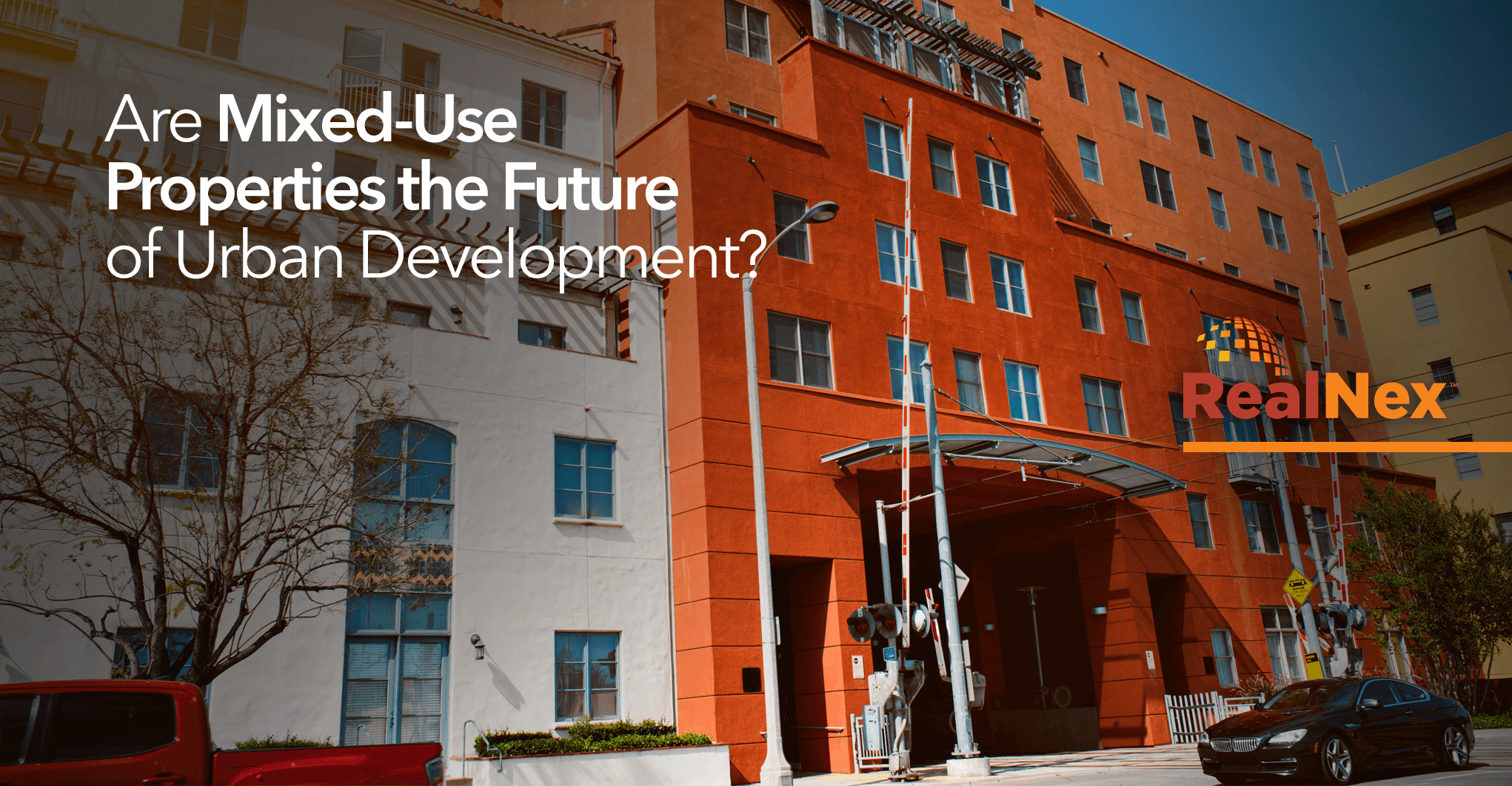
The Return to Suburban Office: Rethinking Location Strategy

Posted by RealNex on Apr 21, 2026, 8:30:00 AM

For a while, it felt like suburban office space had lost its place in the conversation. The focus was on downtowns, trophy buildings, and dense urban cores. But lately, something interesting has been happening. Suburban offices are quietly working their way back into favor, and not just as a fallback option.

This isn’t a full retreat from cities. It’s more of a recalibration. Companies are taking a closer look at how their teams actually work and where it makes sense to be located. In many cases, suburban offices are starting to check a lot of boxes.

Why Suburban Offices Are Back on the Radar

One of the biggest drivers is flexibility. As hybrid work settles in, companies don’t always need a massive central headquarters. What they do need is space that’s convenient, affordable, and easy for employees to access a few days a week.

For many workers, that means avoiding long commutes into a central business district. Suburban offices, especially those located near residential areas, can often significantly reduce travel time for employees and improve their work-life balance. That convenience matters, especially if you’re in a competitive market.

Cost plays a role, too. Suburban rents are often more predictable and manageable than central business district pricing, especially when you factor in additional costs such as parking, operating expenses, and build-out costs. For companies watching budgets closely, that difference can be meaningful.

A Different Kind of Office Demand

What’s interesting is that tenants moving toward suburban locations aren’t looking for the same kind of space they leased ten years ago. The demand is shifting toward smaller footprints, cleaner layouts, and buildings that feel modern without being excessive.

What today’s tenants seem to care about most isn’t hype; rather, it’s how a space fits into their everyday life. Suburban offices with features such as natural light, decent common areas, and reliable tech are doing well, especially when there’s a gym or coffee spot nearby. Add a walking trail, and that’s even better. These buildings aren’t built to be the most exciting or flashy on the block. Instead, they’re designed to make your life easier.

How This Shift Affects Development and Investment

Developers and investors are taking notice of these trends, too. In many markets, we’re seeing developers choosing to revive older office parks, rather than building new construction from the

From an investment perspective, suburban office can make sense when the numbers are right, too. These properties tend to come with lower operating costs and tenants who stick around longer. Sectors like professional services and healthcare groups still need physical space, and they often value stability over prestige. And when you’re trying to plan in a market that can be anything but predictable, that kind of stability goes a long way.

What This Means for Brokers

For brokers, the return to suburban office is less about selling a location and more about helping tenants think through strategy. Many companies are weighing multiple scenarios: stay urban, move suburban, split locations, or adopt a hub-and-spoke model.

That’s where brokers can add real value, by asking the right questions. How often will employees be in the office? Where do they live? What kind of space actually helps support collaboration without feeling wasted and empty?

Matching tenants with the right location mix takes more nuance than it used to. It also takes organization. Tracking multiple site options, comparing markets, and managing longer decision timelines can get complicated quickly. Using tools like RealNex helps brokers keep that process clear and coordinated, especially when deals involve tradeoffs rather than obvious answers.

Not a Trend, But a Reassessment

The renewed interest in suburban office space isn’t about taking a step backwards. It’s about adjusting to how work has changed. Companies are being more intentional about where they put their people and why.

For brokers who understand that shift and can help clients navigate it thoughtfully, the suburban office market is becoming less of a second choice and more of a strategic one.

RealNex is a CRM tool that can be used by commercial real estate professionals to work more efficiently and improve their productivity. At RealNex, we offer an incredibly powerful, yet amazingly simple, end-to-end solution. To learn more about RealNex and see samples of the products that we offer, visit our website. When you are ready to experience the RealNex difference for yourself, schedule a demo or contact us today. We’d love to talk with you!
Read More

Topics: CRE, CRE Tech, CRM, Real Estate Technology, CRE Marketing, proptech, visualization, 3D VR, mixed use, adaptive reuse, video

Are Mixed-Use Properties the Future of Urban Development?

Posted by RealNex on Apr 14, 2026, 8:00:00 AM

If you have spent any time in growing cities, you’ve probably started to notice a pattern. New developments aren’t just office buildings anymore. They’re not just apartments, and they’re definitely not just retail. More often than not, they’re a mix of everything, including places where people can live, work, eat, shop, and gather without getting in a car.

That’s the idea behind mixed-use development, and it’s quickly becoming one of the most talked-about trends in urban commercial real estate.

At a basic level, mixed-use properties combine two or more uses—such as residential, office, retail, hospitality, or entertainment—into a single project or connected campus. But what’s driving the momentum isn’t just design. It’s how people actually want to live and do business today.

Why Mixed-Use Is Gaining Traction

Urban residents and businesses are valuing convenience more than ever. Things like long commutes, isolated office parks, and single-purpose districts feel outdated in cities where space is limited and time is precious. Mixed-use developments respond to that reality by bringing daily needs closer together.

For businesses, this kind of environment can be a real draw. Office tenants like being located near restaurants, housing, and transit. Retailers benefit from built-in foot traffic. Residential tenants appreciate having services and amenities within walking distance. When it works well, everyone feeds off the same ecosystem.

There’s also a resilience factor. Properties that rely on just one type of tenant can struggle when demand shifts. Mixed-use developments tend to spread that risk. If office leasing slows, residential or experiential retail may help stabilize the property. That balance is appealing to investors looking for long-term durability.

The Challenges Behind the Scenes

Of course, mixed-use isn’t a magic solution. These projects are complicated. Different uses come with different lease structures, operating requirements, and tenant expectations. Zoning approvals can take time. Construction costs are often higher. And managing a property with multiple uses requires more coordination than a traditional single-asset building.

From a leasing standpoint, timing matters too. Bringing the right mix of tenants online in the right sequence can make or break a project. A great restaurant opening too early (or too late) can struggle if the surrounding uses aren’t active yet.

That’s where careful planning, realistic underwriting, and strong market knowledge become critical.

How Brokers Fit Into the Picture

For brokers, mixed-use developments change the nature of the job. Instead of focusing on one asset class, brokers are often working across several at once. They’re helping owners think about tenant mix, not just individual vacancies. They’re explaining how one lease decision can affect the entire property.

This kind of work leans more toward advisory than transactional. Brokers who understand how different uses interact and can communicate that story clearly, bring real value to developers and investors navigating complex projects.

Technology also plays a role here. Managing multiple tenant types, tracking prospects, and keeping deals organized across a mixed-use property requires solid systems. Platforms like RealNex help brokers stay organized and informed as these projects move from concept to reality.

Looking Ahead

Are mixed-use properties the future of urban development? Maybe not the only future, but they’re certainly a big part of it.

As cities grow denser and expectations continue to shift, developments that blend uses, create community, and offer flexibility are likely to stay in demand. For commercial real estate professionals, understanding how these projects work and how to support them will only become more important in the years ahead.

RealNex is a CRM tool that can be used by commercial real estate professionals to work more efficiently and improve their productivity. At RealNex, we offer an incredibly powerful, yet amazingly simple, end-to-end solution. To learn more about RealNex and see samples of the products that we offer, visit our website. When you are ready to experience the RealNex difference for yourself, schedule a demo or contact us today — we’d love to talk with you!

Read More

Topics: CRE, CRE Tech, CRM, Real Estate Technology, CRE Marketing, proptech, visualization, 3D VR, mixed use, adaptive reuse, video

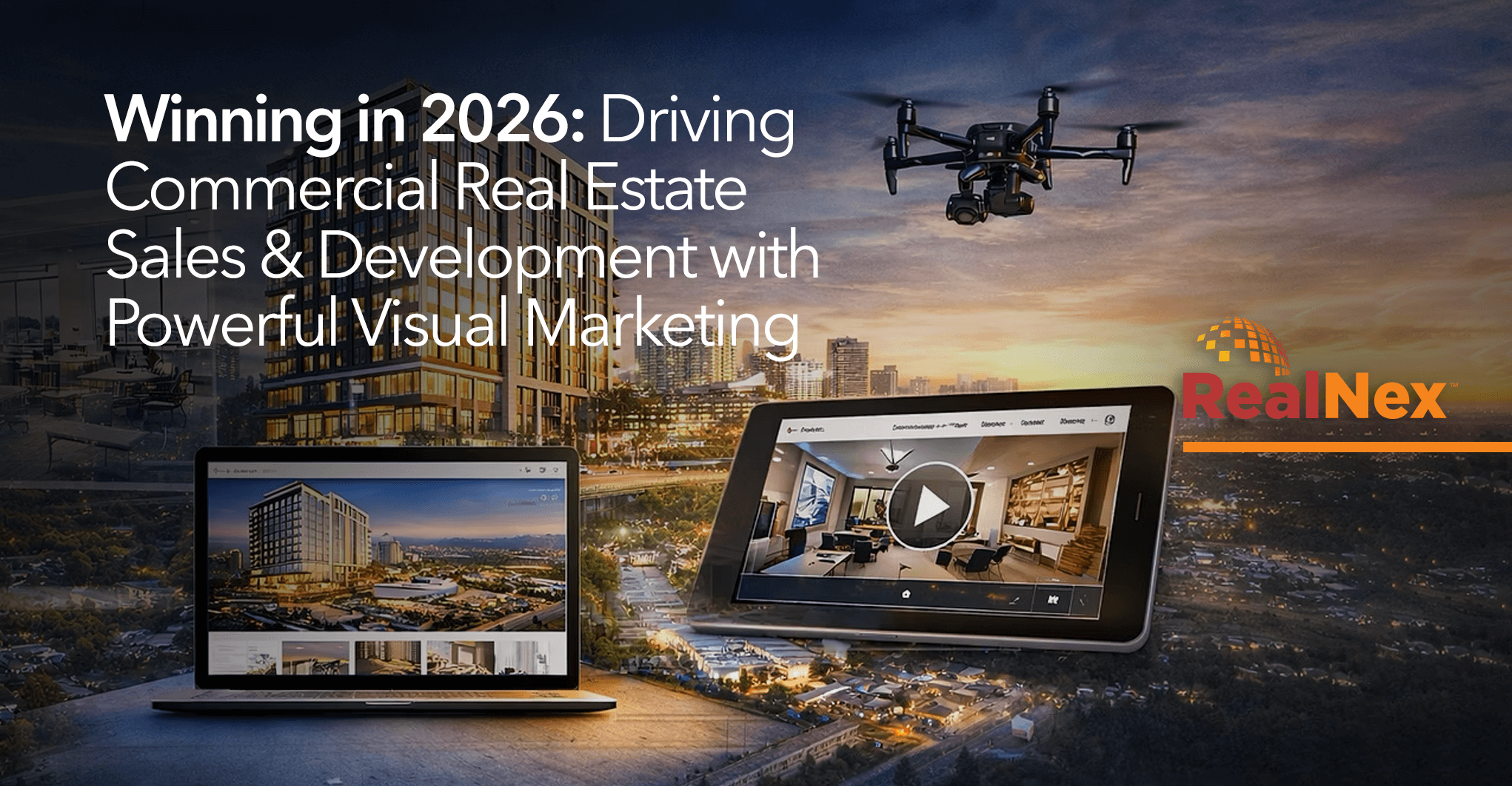
Winning in 2026: Driving Commercial Real Estate Sales & Development with Powerful Visual Marketing

Posted by RealNex on Jan 28, 2026, 11:23:32 AM

Introduction:

In 2026, commercial real estate success requires more than listings, floor plans, and static imagery. Brokers, developers, owners, and investors who win are those who use immersive visual marketing to communicate value instantly, build confidence early, and move deals forward faster.

Today’s buyers, tenants, and capital partners evaluate more opportunities remotely and earlier in the funnel. If value isn’t immediately clear, attention is lost — and so is momentum.

RealNex-VR delivers a complete suite of commercial real estate visual solutions designed to elevate every stage of sales and development, from concept to close.

The 2026 CRE Estate Marketing Challenge

The commercial real estate market is more competitive — and more compressed — than ever. Buyers and tenants evaluate more properties in less time, often remotely, and make decisions earlier in the process.

Key challenges CRE professionals face:

  • Limited attention from investors and tenants

  • Visually sophisticated competition

  • Longer sales cycles driven by uncertainty

  • Pressure to justify value before in-person tours

Listings with video and 3D Tours generate 49% more inquiries than listings without them (LoopNet). In a market where attention is limited, even strong assets get skipped when the value isn’t immediately clear.


Why Traditional Marketing Is No Longer Enough

Static photography and basic floor plans still matter — but they no longer tell the full story. They fail to:

  • Communicate scale, flow, and spatial relationships

  • Provide environmental and location context

  • Support remote decision-making with confidence

As a result, prospects often move on before fully understanding a property’s potential.

"If prospects can’t quickly understand a property’s value, they won’t wait around to figure it out.”


The Power of Visual Marketing in CRE

High-impact visual marketing transforms how properties are understood and evaluated.

Effective CRE visuals:

  • Reduce friction in the decision-making process

  • Answer key questions before they’re asked

  • Increase engagement and time spent reviewing assets

  • Elevate credibility and perceived value

Listings with high-quality visuals (including 3D Tours and Aerial Videos) receive 2× more engagement than those with static images alone (CoStar).  This shift isn’t cosmetic — it directly influences deal velocity and deal quality.


Visual Solutions That Drive Results

Virtual tours allow stakeholders to explore properties on their own time, from anywhere — accelerating understanding and alignment.

Key benefits:

  • Fewer unqualified site visits

  • Better-prepared prospects

  • Faster internal and external consensus

RealNex’ Virtual Tours transform properties into immersive, self-guided experiences that support pre-leasing, pre-sales, and remote decision-making.

Explore the Virtual Tour → Walk the space remotely in under 60 seconds.

Property Videos & Cinematic Storytelling

Cinematic property videos communicate scale, flow, and narrative — far beyond what photos alone can achieve.

What video delivers:

  • Faster engagement with listings

  • Clear understanding of layout and usage

  • Stronger emotional connection to the asset

RealNex’ Property Video Tours combine guided storytelling with professional visuals to help brokers differentiate listings and help investors quickly grasp opportunity.

Watch the Property Video → See flow, features, and positioning fast.

Aerial & Drone Media

Aerial visuals provide instant geographic and contextual clarity that ground-level imagery can’t.

They highlight:

  • Access points and circulation

  • Surrounding amenities and development

  • Site scale and market positioning

RealNex’ Aerial Video Tours turn location into a strategic advantage.

LoopNet reports that aerial video tours increase engagement by 40%, helping prospects evaluate location context and surrounding amenities faster.  This is especially valuable when site selection, access, and neighborhood positioning are key decision drivers.


Watch the Aerial Tour → Understand location context instantly.

3D Renderings & Pre-Construction Visualization

For development and repositioning projects, visuals are often the only way to sell the vision.

Renderings help teams:

  • Secure pre-leasing commitments

  • Align internal stakeholders

  • Support entitlement and investor presentations

RealNex’ 3D Renderings bring clarity, credibility, and momentum to projects before they exist.

NAIOP research shows that pre-construction marketing using Virtual Tours and Renderings can boost pre-leasing rates by 40%.  For developers, this turns visual storytelling into measurable leasing momentum before delivery.


RealSite™: One Platform. One Competitive Edge.

RealSite™ unifies all our visual solutions into a single, web-delivered property experience. Virtual tours, renderings, video, and aerial media live in one branded destination — keeping prospects focused and engaged.

For brokers, RealSite simplifies marketing.

For developers, it centralizes communication.

For owners and investors, it delivers clarity and confidence — faster.


View a RealSite Experience → Everything in one shareable destination.

How RealNex-VR Supports Every Stage of the Lifecycle

Concept & Planning

  • 3D renderings

  • Site context visualization

Marketing & Leasing

  • Virtual tours

  • Property videos

  • Aerial media

Sales & Investment

  • Investor-ready presentations

  • Branded, consistent visual assets

A Smarter Way to Succeed in 2026

In a market defined by limited attention and high expectations, visual clarity separates leaders from laggards. Individually, each RealNex-VR solution enhances marketing. Together, they form a comprehensive visual strategy that accelerates sales, shortens leasing cycles, and elevates perceived value.

Visual marketing is no longer an enhancement — it’s infrastructure.

Next Steps — Elevate Your Marketing Strategy

If you’re preparing for sales, leasing, or development in 2026, now is the time to rethink how your properties are presented.

RealNex-VR helps CRE professionals:

  • Stand out in competitive markets

  • Accelerate decision-making

  • Close deals with confidence

Schedule a Visual Marketing Consultation !

Read More

Topics: CRE, CRE Tech, CRM, Real Estate Technology, prospecting, CRE Marketing, proptech, visualization, 3D VR, adaptive reuse, video

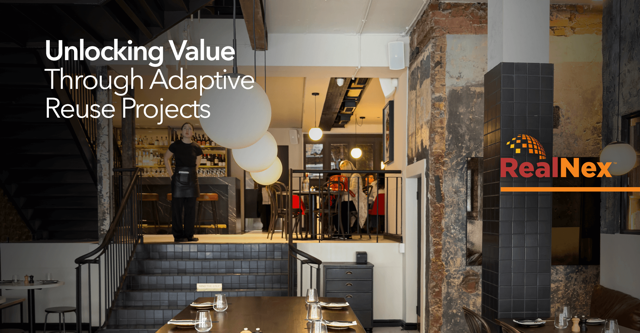
Unlocking Value Through Adaptive Reuse Projects

Posted by RealNex on Dec 17, 2025, 9:00:02 AM

As the commercial real estate industry continues to evolve, adaptive reuse has emerged as one of the most effective strategies for unlocking value in underutilized or underperforming assets. Across the country, developers and investors are transforming vacant office towers and obsolete industrial facilities into thriving multifamily, healthcare, and mixed-use properties.

What was once viewed as a niche approach is now becoming a cornerstone of modern real estate investment. Adaptive reuse not only serves to breathe new life into existing structures but also addresses much broader market needs: a shortage of affordable housing, shifting retail patterns, and the demand for sustainable development.

The Drivers Behind Adaptive Reuse

A number of key factors are behind the rise in adaptive reuse projects:

  • Vacant Office Inventory: With hybrid work reducing office demand, millions of square feet in central business districts sit underused. Converting offices into residential or mixed-use developments is helping cities revitalize tired downtown areas.
  • E-commerce and Retail Shifts: As brick-and-mortar retail continues to consolidate and downsize, obsolete shopping centers are being repurposed into logistics hubs or medical complexes.
  • Sustainability Goals: Reusing existing structures helps to reduce carbon emissions and waste commonly associated with demolition and new construction, aligning with ESG objectives and goals that many investors now prioritize.
  • Zoning Flexibility and Incentives: Many areas are easing strict zoning restrictions and even offering tax incentives to help encourage redevelopment, particularly in urban locations where new construction is costly or limited by available land.

Challenges of Adaptive Reuse

Despite its appeal, adaptive reuse isn’t without its challenges. Each project comes with its own unique hurdles that must be taken into consideration, such as:

  • Complex Building Codes: Older properties can often require extensive site-wide upgrades to meet current safety and accessibility standards.
  • High Upfront Costs: While reuse can save on materials, retrofitting old or outdated systems can be expensive and difficult. 
  • Financing Difficulties: Lenders may view conversions as higher-risk,  which may require creative financing or public-private partnerships.
  • Zoning and Community Pushback: Rezoning approvals can take time, and community concerns around density or traffic can often stall progress.

Yet, for those willing to take on these challenges, the long-term rewards—steady income streams, community revitalization, and environmental benefits—are significant.

Where Brokers Fit In

Adaptive reuse presents a tremendous opportunity for brokers who can identify viable conversion candidates and connect the right partners. Brokers can:

  • Spot Opportunity: Look for aging buildings in prime locations—especially assets with strong structural bones, good access, and local redevelopment incentives.
  • Advise on Market Demand: Use data analytics to assess what’s missing in the submarket—whether that’s housing, medical space, or logistics facilities.
  • Connect Stakeholders: Facilitate collaboration between developers, city officials, lenders, and investors to ensure projects move forward efficiently.
  • Position the Vision: When marketing an adaptive reuse property, sell the potential—what it can become, not what it is today.

Platforms like RealNex empower brokers to research markets, analyze property data, and manage investor relationships all in one place—making it easier to uncover and act on adaptive reuse opportunities before they hit the mainstream.

A Strategy for the Future

Adaptive reuse represents the best of both worlds: financial upside and social impact. It’s a strategy that responds to economic realities while supporting sustainability and community growth.

As cities continue to reinvent themselves post-pandemic, the ability to reimagine and reposition assets will be one of the most valuable skills in commercial real estate.

For brokers and investors alike, the message is clear: the future isn’t just about building new—it’s about building smarter.

RealNex is a CRM tool that can be used by commercial real estate professionals to work more efficiently and improve their productivity. At RealNex, we offer an incredibly powerful, yet amazingly simple, end-to-end solution. To learn more about RealNex and see samples of the products that we offer, visit our website. When you are ready to experience the RealNex difference for yourself, schedule a demo or contact us today — we’d love to talk with you!

Read More

Topics: CRE, CRE Tech, CRM, Real Estate Technology, prospecting, CRE Marketing, proptech, adaptive reuse

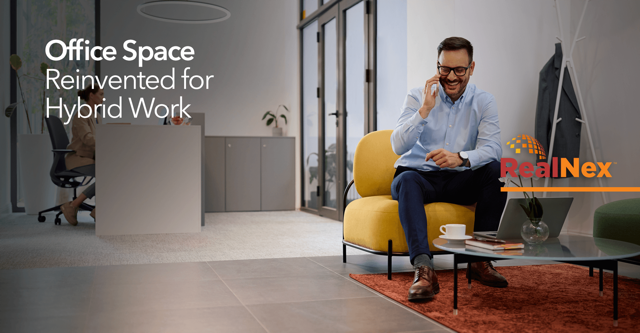
Office Space Reinvented for Hybrid Work

Posted by RealNex on Dec 10, 2025, 9:00:03 AM

The way we work today looks drastically different from the way it did even 10 years ago. As a result, so do today’s physical workplaces. As hybrid work models continue to become the new normal for many workers, the traditional office is being reimagined to meet changing expectations and realities. Today, companies are no longer looking for just a place for their employees to work; they’re seeking environments that help foster collaboration and well-being.

For commercial property owners and developers, this shift represents both a challenge and an opportunity. The key to success is in designing and building office spaces that align with the needs of a rapidly changing workforce, where flexibility and connection are the priority.  

The Case for Flexibility and Collaboration

As we mentioned, flexibility is essential in today’s era of hybrid work. Modern offices should be thought of as an adaptable ecosystem rather than just a simple static layout. Instead of rows of desks, we’re seeing modular spaces that can shift between focus zones, collaboration areas, and meeting lounges depending on the day’s needs.

Hot-desking, moveable partitions, and multi-use furniture are becoming standard features. These designs not only accommodate a rotating workforce but also optimize square footage, an important consideration as many companies reduce their physical footprints.

For commercial brokers, promoting spaces with built-in adaptability can be a powerful differentiator. Showing how a property can evolve and grow with tenants’ needs can make it more appealing to companies navigating long-term hybrid strategies, helping it to stand out from the competition. 

Wellness and the Human Experience

Today’s employees want more than just a desk; they want a work environment that helps support their health and well-being. Building design now prioritizes natural light, indoor air quality, and biophilic elements like greenery and natural materials.

Amenities that once were seen as optional, such as fitness centers, meditation rooms, and outdoor work areas, are now seen as essential. According to JLL’s 2024 Future of Work report, 73% of companies plan to increase investment in health and wellness-related amenities to attract and retain talent.

For property owners, investing in wellness features can increase both occupancy and tenant satisfaction. For brokers, highlighting these amenities in marketing materials and tours can help position properties as forward-thinking and employee-centric.

Smart Technology Integration

Technology has become the center of the hybrid office. Smart building systems now automate features such as lighting, climate control, and occupancy management to enhance comfort and efficiency. Touchless entry, digital booking systems, and AI-driven energy monitoring are helping companies manage flexible work arrangements while maintaining productivity and sustainability.

Internet connectivity is also more critical than ever. Tenants expect robust, secure, high-speed internet that supports video conferencing and cloud-based operations seamlessly. Properties equipped with integrated tech systems and reliable connectivity are commanding higher demand—and higher value.

Positioning Properties for the Hybrid Era

Brokers and property owners can take several steps to ensure their assets appeal to hybrid-minded tenants:

  • Highlight adaptability: Showcase flexible floor plans and design options that allow tenants to quickly and easily reconfigure space.
  • Focus on wellness: Market the building’s health-forward features, such as air quality systems, natural light, green spaces, and other wellness amenities.
  • Promote tech readiness: Make sure buildings offer strong connectivity and smart infrastructure to help support heavy hybrid workflows.
  • Offer flexible terms: Today’s tenants are looking for shorter leases, shared spaces, and scalable solutions that minimize long-term commitments.

Properties that closely align with these expectations will stand out in a highly competitive market, where tenants can be more selective about how and where they work.

The Future of the Office

The hybrid office isn’t simply a temporary trend; rather, it’s the foundation of the workplace design of the future. As the definition of “office” continues to evolve, the physical workplace must evolve with it.

RealNex is a CRM tool that can be used by commercial real estate professionals to work more efficiently and improve their productivity. At RealNex, we offer an incredibly powerful, yet amazingly simple, end-to-end solution. To learn more about RealNex and see samples of the products that we offer, visit our website. When you are ready to experience the RealNex difference for yourself, schedule a demo or contact us today — we’d love to talk with you!

Read More

Topics: CRE, CRE Tech, CRM, Real Estate Technology, prospecting, CRE Marketing, proptech, return to office, office design, office leasing

Subscribe to Email Updates

Recent Posts

Posts by Topic

see all