---
title: RealNews from RealNex | mixed use
description: mixed use | Blog posts about commercial real estate markets, tools, trends, and leaders.
---
[Demo](https://www.realnex.com/demo) | [Training](https://www.realnex.com/resources/pearl) | [Webinar](https://www.realnex.com/webinar) | [Call 281.299.3161](tel:+12812993161)
[](https://www.realnex.com/)
[Home](https://www.realnex.com/) [Platform](https://www.realnex.com/navigator) [Solutions](https://www.realnex.com/solutions) [Resources](https://www.realnex.com/resources) [Pricing](https://www.realnex.com/pricing) [About](https://www.realnex.com/about) [Contact Us](https://www.realnex.com/contact)
[Navigator](https://www.realnex.com/navigator) [KRM](https://www.realnex.com/commercial-real-estate-crm) [MarketEdge](https://www.realnex.com/commercial-real-estate-financial-analysis) [Bridge](https://www.realnex.com/commercial-real-estate-transaction-management) [MarketPlace](https://www.realnex.com/commercial-real-estate-marketplace) [Vault](https://www.realnex.com/commercial-real-estate-vault) [Mobile App](https://www.realnex.com/commercial-real-estate-mobile-app) [Insights](https://www.realnex.com/commercial-real-estate-insights) [Intelligence](https://www.realnex.com/intelligence) [Visuals](https://www.realnex.com/commercial-real-estate-visuals)
[Investment Sales](https://www.realnex.com/solutions/investment-sales) [Tenant Reps](https://www.realnex.com/solutions/tenant-reps) [Leasing Agents](https://www.realnex.com/solutions/leasing-agents) [Leaders](https://www.realnex.com/solutions/broker-owners) [Marketing](https://www.realnex.com/solutions/marketing) [Research](https://www.realnex.com/solutions/company) [Asset Managers](https://www.realnex.com/solutions/asset-managers)
[Blog](https://www.realnex.com/resources/blog) [Press](https://www.realnex.com/resources/press-releases) [Social Media](https://www.realnex.com/resources/social) [Video](https://www.realnex.com/resources/videos) [Training & Support](https://www.realnex.com/resources/training-support) [PEARL](https://www.realnex.com/resources/pearl) [CRE Glossary](https://www.realnex.com/resources/glossary) [What's New](https://www.realnex.com/resources/whats-new)
[Navigator](https://www.realnex.com/pricing#1) [KRM](https://www.realnex.com/pricing#27) [Bridge](https://www.realnex.com/pricing#28) [MarketEdge](https://www.realnex.com/pricing#3) [MarketPlace](https://www.realnex.com/pricing#4) [Marketing](https://www.realnex.com/pricing#20)
[Core Tenets](https://www.realnex.com/about#core-tenets) [Story](https://www.realnex.com/about#story) [Team](https://www.realnex.com/about#team) [Heritage](https://www.realnex.com/about#heritage) [Impact](https://www.realnex.com/about#impact)
[Home](https://www.realnex.com/)
Platform
[Navigator](https://www.realnex.com/navigator) [KRM](https://www.realnex.com/commercial-real-estate-crm) [MarketEdge](https://www.realnex.com/commercial-real-estate-financial-analysis) [Bridge](https://www.realnex.com/commercial-real-estate-transaction-management) [MarketPlace](https://www.realnex.com/commercial-real-estate-marketplace) [Vault](https://www.realnex.com/commercial-real-estate-vault) [Mobile App](https://www.realnex.com/commercial-real-estate-mobile-app) [Insights](https://www.realnex.com/commercial-real-estate-insights) [Intelligence](https://www.realnex.com/intelligence) [Visuals](https://www.realnex.com/commercial-real-estate-visuals)
Solutions
[Investment Sales](https://www.realnex.com/solutions/investment-sales) [Tenant Reps](https://www.realnex.com/solutions/tenant-reps) [Leasing Agents](https://www.realnex.com/solutions/leasing-agents) [Leaders](https://www.realnex.com/solutions/broker-owners) [Marketing](https://www.realnex.com/solutions/marketing) [Research](https://www.realnex.com/solutions/company) [Asset Managers](https://www.realnex.com/solutions/asset-managers)
Resources
[Blog](https://www.realnex.com/resources/blog) [Press](https://www.realnex.com/resources/press-releases) [Social Media](https://www.realnex.com/resources/social) [Video](https://www.realnex.com/resources/videos) [Training & Support](https://www.realnex.com/resources/training-support) [PEARL](https://www.realnex.com/resources/pearl) [CRE Glossary](https://www.realnex.com/resources/glossary) [What's New](https://www.realnex.com/resources/whats-new)
Pricing
[Navigator](https://www.realnex.com/pricing#1) [KRM](https://www.realnex.com/pricing#27) [Bridge](https://www.realnex.com/pricing#28) [MarketEdge](https://www.realnex.com/pricing#3) [MarketPlace](https://www.realnex.com/pricing#4) [Marketing](https://www.realnex.com/pricing#20)
About
[Core Tenets](https://www.realnex.com/about#core-tenets) [Story](https://www.realnex.com/about#story) [Team](https://www.realnex.com/about#team) [Heritage](https://www.realnex.com/about#heritage) [Impact](https://www.realnex.com/about#impact)
[Contact Us](https://www.realnex.com/contact)
[Demo](https://www.realnex.com/demo) [Training](https://www.realnex.com/resources/pearl) [Webinar](https://www.realnex.com/webinar) [Call 281.299.3161](tel:+12812993161)
- [Home](https://www.realnex.com/)
- [Solutions](https://www.realnex.com/home/solutions)
- [CORE](https://www.realnex.com/home/core)
- [MarketEdge](https://www.realnex.com/home/marketedge)
- [MarketPlace](https://www.realnex.com/home/marketplace)
- [RealFit](https://www.realnex.com/home/realfit)
- [RealNex VR](https://www.realnex.com/home/realnexvr)
- [About](https://www.realnex.com/home/about)
- [Media](https://www.realnex.com/home/media)
- [Pricing](https://www.realnex.com/Home/Pricing)
- [Knowledge](https://realnex.zendesk.com/hc/en-us)
- [Contact](https://www.realnex.com/home/contact)
- [Blog](https://blog.realnex.com)
# Real News from RealNex
## [The Return to Suburban Office: Rethinking Location Strategy](https://blog.realnex.com/the-return-to-suburban-office-rethinking-location-strategy)
Posted by [RealNex](https://blog.realnex.com/author/jmfresearch) on Apr 21, 2026, 8:30:00 AM
- [Tweet](https://twitter.com/share)
[](https://blog.realnex.com/the-return-to-suburban-office-rethinking-location-strategy)
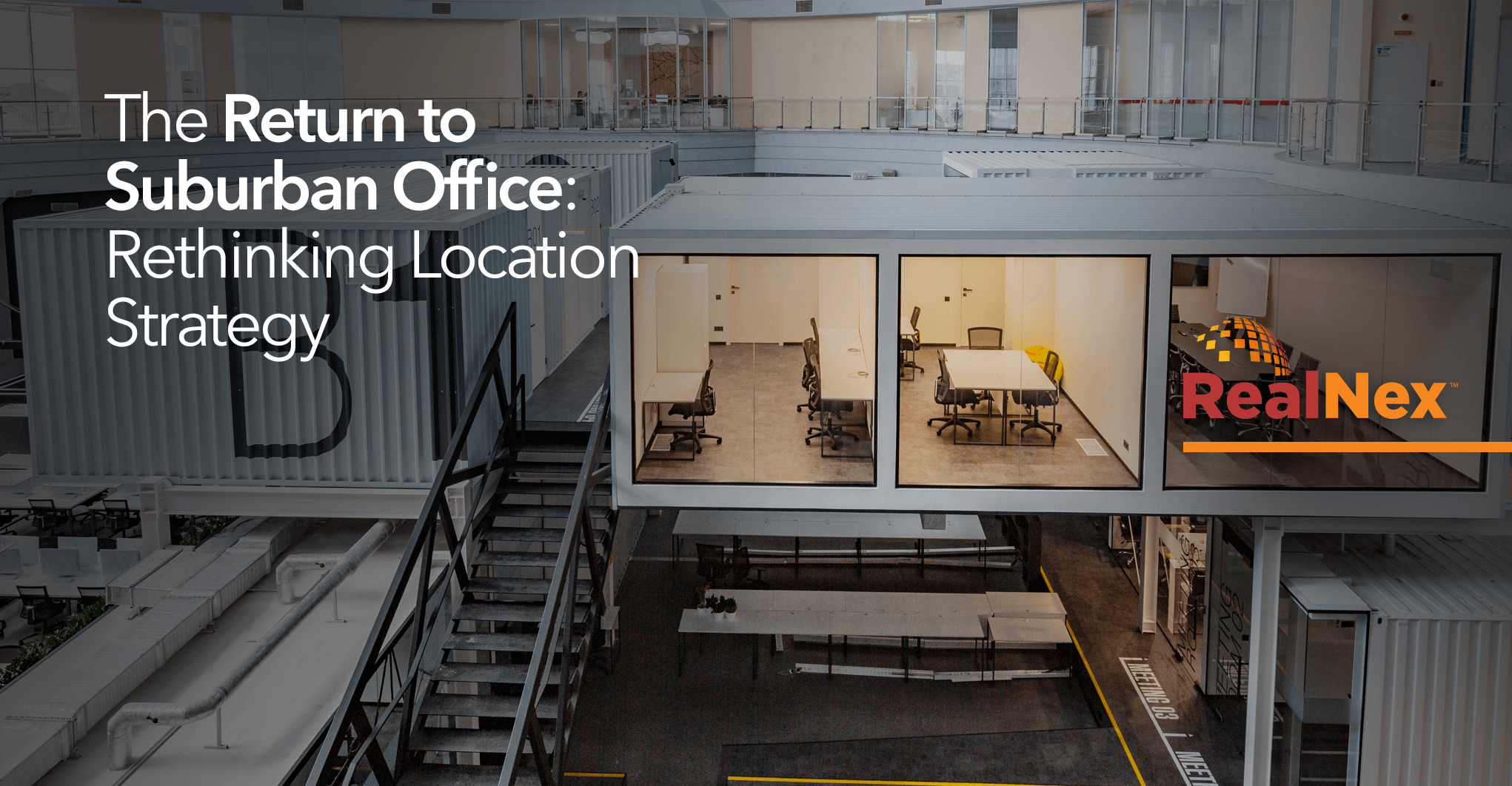
For a while, it felt like suburban office space had lost its place in the conversation. The focus was on downtowns, trophy buildings, and dense urban cores. But lately, something interesting has been happening. Suburban offices are quietly working their way back into favor, and not just as a fallback option.
This isn’t a full retreat from cities. It’s more of a recalibration. Companies are taking a closer look at how their teams actually work and where it makes sense to be located. In many cases, suburban offices are starting to check a lot of boxes.
### **Why Suburban Offices Are Back on the Radar**
One of the biggest drivers is flexibility. As hybrid work settles in, companies don’t always need a massive central headquarters. What they do need is space that’s convenient, affordable, and easy for employees to access a few days a week.
For many workers, that means avoiding long commutes into a central business district. Suburban offices, especially those located near residential areas, can often significantly reduce travel time for employees and improve their work-life balance. That convenience matters, especially if you’re in a competitive market.
Cost plays a role, too. Suburban rents are often more predictable and manageable than central business district pricing, especially when you factor in additional costs such as parking, operating expenses, and build-out costs. For companies watching budgets closely, that difference can be meaningful.
### **A Different Kind of Office Demand**
What’s interesting is that tenants moving toward suburban locations aren’t looking for the same kind of space they leased ten years ago. The demand is shifting toward smaller footprints, cleaner layouts, and buildings that feel modern without being excessive.
What today’s tenants seem to care about most isn’t hype; rather, it’s how a space fits into their everyday life. Suburban offices with features such as natural light, decent common areas, and reliable tech are doing well, especially when there’s a gym or coffee spot nearby. Add a walking trail, and that’s even better. These buildings aren’t built to be the most exciting or flashy on the block. Instead, they’re designed to make your life easier.
### **How This Shift Affects Development and Investment**
Developers and investors are taking notice of these trends, too. In many markets, we’re seeing developers choosing to revive older office parks, rather than building new construction from the
From an investment perspective, suburban office can make sense when the numbers are right, too. These properties tend to come with lower operating costs and tenants who stick around longer. Sectors like professional services and healthcare groups still need physical space, and they often value stability over prestige. And when you’re trying to plan in a market that can be anything but predictable, that kind of stability goes a long way.
### **What This Means for Brokers**
For brokers, the return to suburban office is less about selling a location and more about helping tenants think through strategy. Many companies are weighing multiple scenarios: stay urban, move suburban, split locations, or adopt a hub-and-spoke model.
That’s where brokers can add real value, by asking the right questions. How often will employees be in the office? Where do they live? What kind of space actually helps support collaboration without feeling wasted and empty?
Matching tenants with the right location mix takes more nuance than it used to. It also takes organization. Tracking multiple site options, comparing markets, and managing longer decision timelines can get complicated quickly. Using tools like RealNex helps brokers keep that process clear and coordinated, especially when deals involve tradeoffs rather than obvious answers.
### **Not a Trend, But a Reassessment**
The renewed interest in suburban office space isn’t about taking a step backwards. It’s about adjusting to how work has changed. Companies are being more intentional about where they put their people and why.
For brokers who understand that shift and can help clients navigate it thoughtfully, the suburban office market is becoming less of a second choice and more of a strategic one.
RealNex is a CRM tool that can be used by commercial real estate professionals to work more efficiently and improve their productivity. At RealNex, we offer an incredibly powerful, yet amazingly simple, end-to-end solution. To learn more about RealNex and see samples of the products that we offer, [visit our website](https://realnex.com/). When you are ready to experience the RealNex difference for yourself, [schedule a demo](https://info.realnex.com/demorequest) or [contact us](https://realnex.com/Home/Contact) today. We’d love to talk with you!
[Read More](https://blog.realnex.com/the-return-to-suburban-office-rethinking-location-strategy)
0 Comments [Click here to read/write comments](https://blog.realnex.com/the-return-to-suburban-office-rethinking-location-strategy#comments-listing)
Topics: [CRE](https://blog.realnex.com/topic/cre), [CRE Tech](https://blog.realnex.com/topic/cre-tech), [CRM](https://blog.realnex.com/topic/crm), [Real Estate Technology](https://blog.realnex.com/topic/real-estate-technology), [CRE Marketing](https://blog.realnex.com/topic/cre-marketing), [proptech](https://blog.realnex.com/topic/proptech), [visualization](https://blog.realnex.com/topic/visualization), [3D VR](https://blog.realnex.com/topic/3d-vr), [mixed use](https://blog.realnex.com/topic/mixed-use), [adaptive reuse](https://blog.realnex.com/topic/adaptive-reuse), [video](https://blog.realnex.com/topic/video)
## [Are Mixed-Use Properties the Future of Urban Development?](https://blog.realnex.com/are-mixed-use-properties-the-future-of-urban-development)
Posted by [RealNex](https://blog.realnex.com/author/jmfresearch) on Apr 14, 2026, 8:00:00 AM
- [Tweet](https://twitter.com/share)
[](https://blog.realnex.com/are-mixed-use-properties-the-future-of-urban-development)
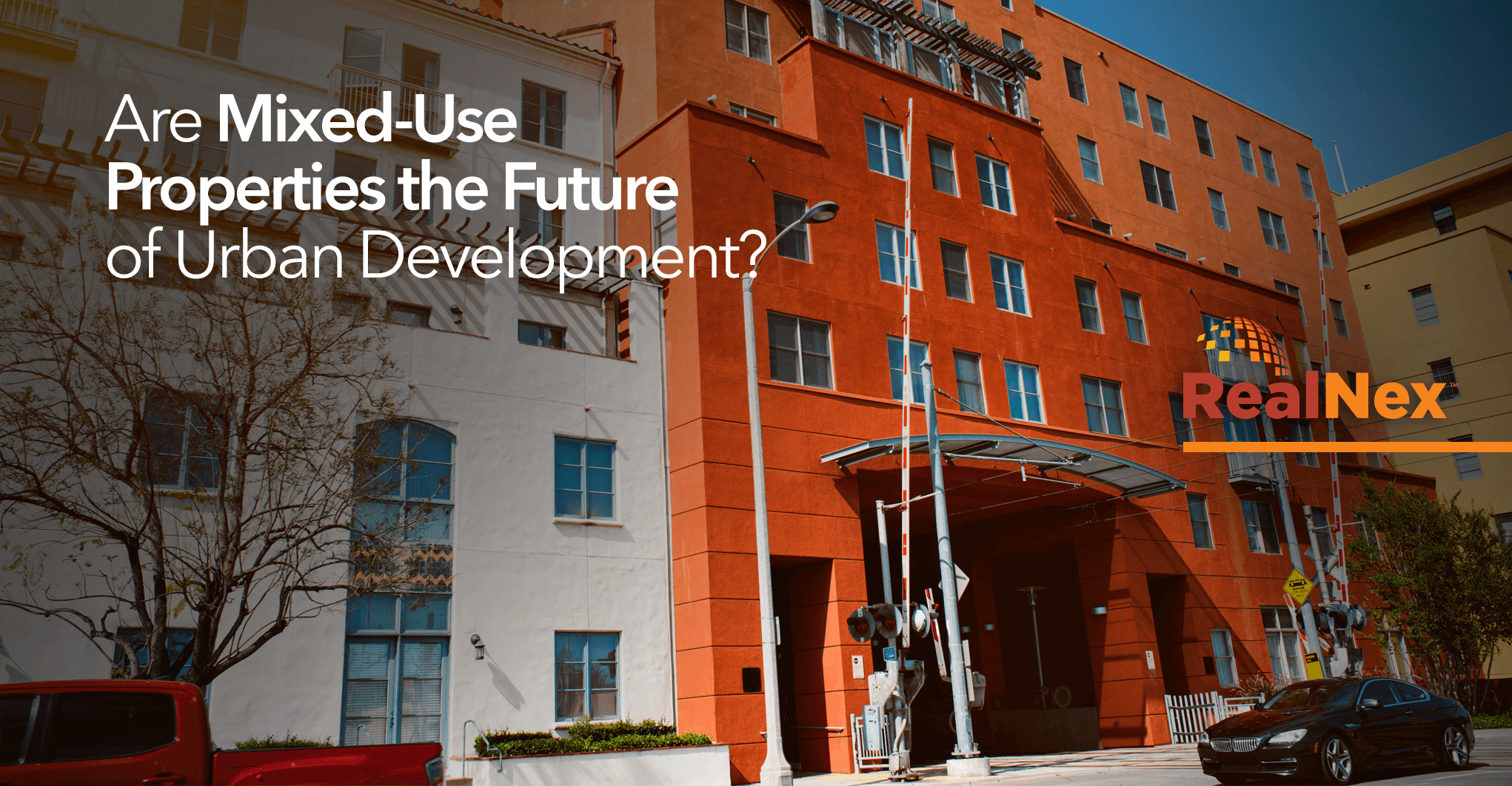
If you have spent any time in growing cities, you’ve probably started to notice a pattern. New developments aren’t just office buildings anymore. They’re not just apartments, and they’re definitely not just retail. More often than not, they’re a mix of everything, including places where people can live, work, eat, shop, and gather without getting in a car.
That’s the idea behind mixed-use development, and it’s quickly becoming one of the most talked-about trends in urban commercial real estate.
At a basic level, mixed-use properties combine two or more uses—such as residential, office, retail, hospitality, or entertainment—into a single project or connected campus. But what’s driving the momentum isn’t just design. It’s how people actually want to live and do business today.
### **Why Mixed-Use Is Gaining Traction**
Urban residents and businesses are valuing convenience more than ever. Things like long commutes, isolated office parks, and single-purpose districts feel outdated in cities where space is limited and time is precious. Mixed-use developments respond to that reality by bringing daily needs closer together.
For businesses, this kind of environment can be a real draw. Office tenants like being located near restaurants, housing, and transit. Retailers benefit from built-in foot traffic. Residential tenants appreciate having services and amenities within walking distance. When it works well, everyone feeds off the same ecosystem.
There’s also a resilience factor. Properties that rely on just one type of tenant can struggle when demand shifts. Mixed-use developments tend to spread that risk. If office leasing slows, residential or experiential retail may help stabilize the property. That balance is appealing to investors looking for long-term durability.
### **The Challenges Behind the Scenes**
Of course, mixed-use isn’t a magic solution. These projects are complicated. Different uses come with different lease structures, operating requirements, and tenant expectations. Zoning approvals can take time. Construction costs are often higher. And managing a property with multiple uses requires more coordination than a traditional single-asset building.
From a leasing standpoint, timing matters too. Bringing the right mix of tenants online in the right sequence can make or break a project. A great restaurant opening too early (or too late) can struggle if the surrounding uses aren’t active yet.
That’s where careful planning, realistic underwriting, and strong market knowledge become critical.
### **How Brokers Fit Into the Picture**
For brokers, mixed-use developments change the nature of the job. Instead of focusing on one asset class, brokers are often working across several at once. They’re helping owners think about tenant mix, not just individual vacancies. They’re explaining how one lease decision can affect the entire property.
This kind of work leans more toward advisory than transactional. Brokers who understand how different uses interact and can communicate that story clearly, bring real value to developers and investors navigating complex projects.
Technology also plays a role here. Managing multiple tenant types, tracking prospects, and keeping deals organized across a mixed-use property requires solid systems. Platforms like RealNex help brokers stay organized and informed as these projects move from concept to reality.
### **Looking Ahead**
Are mixed-use properties the future of urban development? Maybe not the only future, but they’re certainly a big part of it.
As cities grow denser and expectations continue to shift, developments that blend uses, create community, and offer flexibility are likely to stay in demand. For commercial real estate professionals, understanding how these projects work and how to support them will only become more important in the years ahead.
RealNex is a CRM tool that can be used by commercial real estate professionals to work more efficiently and improve their productivity. At RealNex, we offer an incredibly powerful, yet amazingly simple, end-to-end solution. To learn more about RealNex and see samples of the products that we offer, [visit our website](https://realnex.com/). When you are ready to experience the RealNex difference for yourself, [schedule a demo](https://info.realnex.com/demorequest) or [contact us](https://realnex.com/Home/Contact) today — we’d love to talk with you!
[Read More](https://blog.realnex.com/are-mixed-use-properties-the-future-of-urban-development)
0 Comments [Click here to read/write comments](https://blog.realnex.com/are-mixed-use-properties-the-future-of-urban-development#comments-listing)
Topics: [CRE](https://blog.realnex.com/topic/cre), [CRE Tech](https://blog.realnex.com/topic/cre-tech), [CRM](https://blog.realnex.com/topic/crm), [Real Estate Technology](https://blog.realnex.com/topic/real-estate-technology), [CRE Marketing](https://blog.realnex.com/topic/cre-marketing), [proptech](https://blog.realnex.com/topic/proptech), [visualization](https://blog.realnex.com/topic/visualization), [3D VR](https://blog.realnex.com/topic/3d-vr), [mixed use](https://blog.realnex.com/topic/mixed-use), [adaptive reuse](https://blog.realnex.com/topic/adaptive-reuse), [video](https://blog.realnex.com/topic/video)
## [The Rise of Mixed-Use Developments: Creating Vibrant Communities](https://blog.realnex.com/the-rise-of-mixed-use-developments-creating-vibrant-communities)
Posted by [RealNex](https://blog.realnex.com/author/jmfresearch) on Mar 4, 2025, 8:00:00 AM
- [Tweet](https://twitter.com/share)
[](https://blog.realnex.com/the-rise-of-mixed-use-developments-creating-vibrant-communities)
Mixed-use developments are reshaping the commercial real estate landscape, transforming traditional spaces into dynamic hubs where people can live, work, and play. By integrating residential, commercial, and recreational components, these developments offer unique opportunities for investors and developers while creating vibrant, self-sustaining communities. As urban centers evolve and consumer preferences shift, mixed-use projects have become a cornerstone of modern real estate strategies.
[Read More](https://blog.realnex.com/the-rise-of-mixed-use-developments-creating-vibrant-communities)
0 Comments [Click here to read/write comments](https://blog.realnex.com/the-rise-of-mixed-use-developments-creating-vibrant-communities#comments-listing)
Topics: [CRE](https://blog.realnex.com/topic/cre), [CRE Tech](https://blog.realnex.com/topic/cre-tech), [CRM](https://blog.realnex.com/topic/crm), [Real Estate Technology](https://blog.realnex.com/topic/real-estate-technology), [prospecting](https://blog.realnex.com/topic/prospecting), [Productivity](https://blog.realnex.com/topic/productivity), [CRE Marketing](https://blog.realnex.com/topic/cre-marketing), [mixed use](https://blog.realnex.com/topic/mixed-use), [vibrant communities](https://blog.realnex.com/topic/vibrant-communities)
[All posts](https://blog.realnex.com/all)
### Subscribe to Email Updates
### Recent Posts
### Posts by Topic
- [CRM (136)](https://blog.realnex.com/topic/crm)
- [CRE Tech (123)](https://blog.realnex.com/topic/cre-tech)
- [CRE (117)](https://blog.realnex.com/topic/cre)
- [CRE Marketing (110)](https://blog.realnex.com/topic/cre-marketing)
- [blog (108)](https://blog.realnex.com/topic/blog)
- [Real Estate Technology (95)](https://blog.realnex.com/topic/real-estate-technology)
- [prospecting (68)](https://blog.realnex.com/topic/prospecting)
- [Productivity (58)](https://blog.realnex.com/topic/productivity)
- [Did Ya Know (33)](https://blog.realnex.com/topic/did-ya-know)
- [AI (31)](https://blog.realnex.com/topic/ai)
- [emarketing (25)](https://blog.realnex.com/topic/emarketing)
- [RealNex Webinar Series (24)](https://blog.realnex.com/topic/realnex-webinar-series)
- [3D VR (23)](https://blog.realnex.com/topic/3d-vr)
- [proptech (22)](https://blog.realnex.com/topic/proptech)
- [#CRE #CREAGH (19)](https://blog.realnex.com/topic/cre-creagh)
- [listings (18)](https://blog.realnex.com/topic/listings)
- [visualization (16)](https://blog.realnex.com/topic/visualization)
- [RealNex (14)](https://blog.realnex.com/topic/realnex)
- [RealNex News (13)](https://blog.realnex.com/topic/realnex-news)
- [commercial real estate listings (12)](https://blog.realnex.com/topic/commercial-real-estate-listings)
- [email (12)](https://blog.realnex.com/topic/email)
- [Commercial Real Estate (11)](https://blog.realnex.com/topic/commercial-real-estate)
- [return to office (11)](https://blog.realnex.com/topic/return-to-office)
- [financial analysis (10)](https://blog.realnex.com/topic/financial-analysis)
- [marketing (10)](https://blog.realnex.com/topic/marketing)
- [3D (9)](https://blog.realnex.com/topic/3d)
- [Cloud (9)](https://blog.realnex.com/topic/cloud)
- [Uncategorized (9)](https://blog.realnex.com/topic/uncategorized)
- [VR (9)](https://blog.realnex.com/topic/vr)
- [office leasing (8)](https://blog.realnex.com/topic/office-leasing)
- [CRETech (7)](https://blog.realnex.com/topic/cretech)
- [ESG (7)](https://blog.realnex.com/topic/esg)
- [Leasing (7)](https://blog.realnex.com/topic/leasing)
- [Virtual Reality (7)](https://blog.realnex.com/topic/virtual-reality)
- [co-working (7)](https://blog.realnex.com/topic/co-working)
- [shared workspace (7)](https://blog.realnex.com/topic/shared-workspace)
- [CRE Leaders (6)](https://blog.realnex.com/topic/cre-leaders)
- [CREsoftware (6)](https://blog.realnex.com/topic/cresoftware)
- [commercial real estate tech (6)](https://blog.realnex.com/topic/commercial-real-estate-tech)
- [mobile app (6)](https://blog.realnex.com/topic/mobile-app)
- [sustainability (6)](https://blog.realnex.com/topic/sustainability)
- [virtual tours (6)](https://blog.realnex.com/topic/virtual-tours)
- [CRE broker technology (5)](https://blog.realnex.com/topic/cre-broker-technology)
- [CRE market knowledge (5)](https://blog.realnex.com/topic/cre-market-knowledge)
- [commercial real estate competitive advantage (5)](https://blog.realnex.com/topic/commercial-real-estate-competitive-advantage)
- [digital nomad (5)](https://blog.realnex.com/topic/digital-nomad)
- [on-demand workforce (5)](https://blog.realnex.com/topic/on-demand-workforce)
- [#Covid-19 (4)](https://blog.realnex.com/topic/covid-19)
- [CRE deal cycle (4)](https://blog.realnex.com/topic/cre-deal-cycle)
- [CRE technology 2026 (4)](https://blog.realnex.com/topic/cre-technology-2026)
- [adaptive reuse (4)](https://blog.realnex.com/topic/adaptive-reuse)
- [commercial real estate workflow (4)](https://blog.realnex.com/topic/commercial-real-estate-workflow)
- [CRE Market Update (3)](https://blog.realnex.com/topic/cre-market-update)
- [CRE Social Media (3)](https://blog.realnex.com/topic/cre-social-media)
- [LEED (3)](https://blog.realnex.com/topic/leed)
- [Social media (3)](https://blog.realnex.com/topic/social-media)
- [Work from Home (3)](https://blog.realnex.com/topic/work-from-home)
- [carbonneutral (3)](https://blog.realnex.com/topic/carbonneutral)
- [cleantech (3)](https://blog.realnex.com/topic/cleantech)
- [mixed use (3)](https://blog.realnex.com/topic/mixed-use)
- [office design (3)](https://blog.realnex.com/topic/office-design)
- [podcast (3)](https://blog.realnex.com/topic/podcast)
- [video (3)](https://blog.realnex.com/topic/video)
- [#investment analysis (2)](https://blog.realnex.com/topic/investment-analysis)
- [BOV (2)](https://blog.realnex.com/topic/bov)
- [CORE (2)](https://blog.realnex.com/topic/core)
- [CRM implementation (2)](https://blog.realnex.com/topic/crm-implementation)
- [Cyber Security (2)](https://blog.realnex.com/topic/cyber-security)
- [Real Estate Investment (2)](https://blog.realnex.com/topic/real-estate-investment)
- [big data (2)](https://blog.realnex.com/topic/big-data)
- [revitalizing assets (2)](https://blog.realnex.com/topic/revitalizing-assets)
- [virtual deal room (2)](https://blog.realnex.com/topic/virtual-deal-room)
- [Augmented Reality (1)](https://blog.realnex.com/topic/augmented-reality)
- [Digital Tours (1)](https://blog.realnex.com/topic/digital-tours)
- [Family Office (1)](https://blog.realnex.com/topic/family-office)
- [Goals (1)](https://blog.realnex.com/topic/goals)
- [Industrial (1)](https://blog.realnex.com/topic/industrial)
- [Price trends (1)](https://blog.realnex.com/topic/price-trends)
- [Ultra-Wealthy Investors (1)](https://blog.realnex.com/topic/ultra-wealthy-investors)
- [WFH (1)](https://blog.realnex.com/topic/wfh)
- [blockchain (1)](https://blog.realnex.com/topic/blockchain)
- [branding (1)](https://blog.realnex.com/topic/branding)
- [brick and mortar (1)](https://blog.realnex.com/topic/brick-and-mortar)
- [chatgpt (1)](https://blog.realnex.com/topic/chatgpt)
- [cold calling (1)](https://blog.realnex.com/topic/cold-calling)
- [complete cre tech solution (1)](https://blog.realnex.com/topic/complete-cre-tech-solution)
- [digital twins (1)](https://blog.realnex.com/topic/digital-twins)
- [foreign investment (1)](https://blog.realnex.com/topic/foreign-investment)
- [green lease (1)](https://blog.realnex.com/topic/green-lease)
- [hybrid workforce (1)](https://blog.realnex.com/topic/hybrid-workforce)
- [listing (1)](https://blog.realnex.com/topic/listing)
- [logistics (1)](https://blog.realnex.com/topic/logistics)
- [ncreif property index (1)](https://blog.realnex.com/topic/ncreif-property-index)
- [presentations (1)](https://blog.realnex.com/topic/presentations)
- [property marketing (1)](https://blog.realnex.com/topic/property-marketing)
- [real estate (1)](https://blog.realnex.com/topic/real-estate)
- [retail (1)](https://blog.realnex.com/topic/retail)
- [rollout (1)](https://blog.realnex.com/topic/rollout)
- [smart buildings (1)](https://blog.realnex.com/topic/smart-buildings)
- [supply chain (1)](https://blog.realnex.com/topic/supply-chain)
- [technology (1)](https://blog.realnex.com/topic/technology)
- [tenant (1)](https://blog.realnex.com/topic/tenant)
- [tokenization (1)](https://blog.realnex.com/topic/tokenization)
- [vibrant communities (1)](https://blog.realnex.com/topic/vibrant-communities)
- [wellness (1)](https://blog.realnex.com/topic/wellness)
see all
[](https://www.realnex.com/home/about)
504 Murphy Road Suite L
Stafford, TX 77477, USA
281-299-3161
[sales@realnex.com](mailto:sales@realnex.com)
- Quick Links
- [Home](https://www.realnex.com/)
- [Solutions](https://www.realnex.com/home/solutions)
- [CORE](https://www.realnex.com/home/core)
- [MarketEdge](https://www.realnex.com/home/marketedge)
- [MarketPlace](https://www.realnex.com/home/marketplace)
- [RealNex VR](https://www.realnex.com/home/realnexvr)
- [RealFit](https://www.realnex.com/home/realfit)
- [About](https://www.realnex.com/home/about)
- [Media](https://www.realnex.com/home/media)
- [Pricing](https://www.realnex.com/Home/Pricing)
- [Contact](https://www.realnex.com/home/contact)
- [Get Started](https://www.realnex.com/home/getstarted)
- [Knowledge Base](https://realnex.zendesk.com/hc/en-us)
- [Contact Sales](https://www.realnex.com/home/about#)
- [Contact Support](https://www.realnex.com/home/about#)
##### Follow Us on Social Networks
-
-
-
-
-
© 2026 All Rights Reserved. RealNex, LLC
[Terms & Condition](https://www.realnex.com/home/terms) • [Privacy](https://www.realnex.com/home/privacy)