
Real News from RealNex

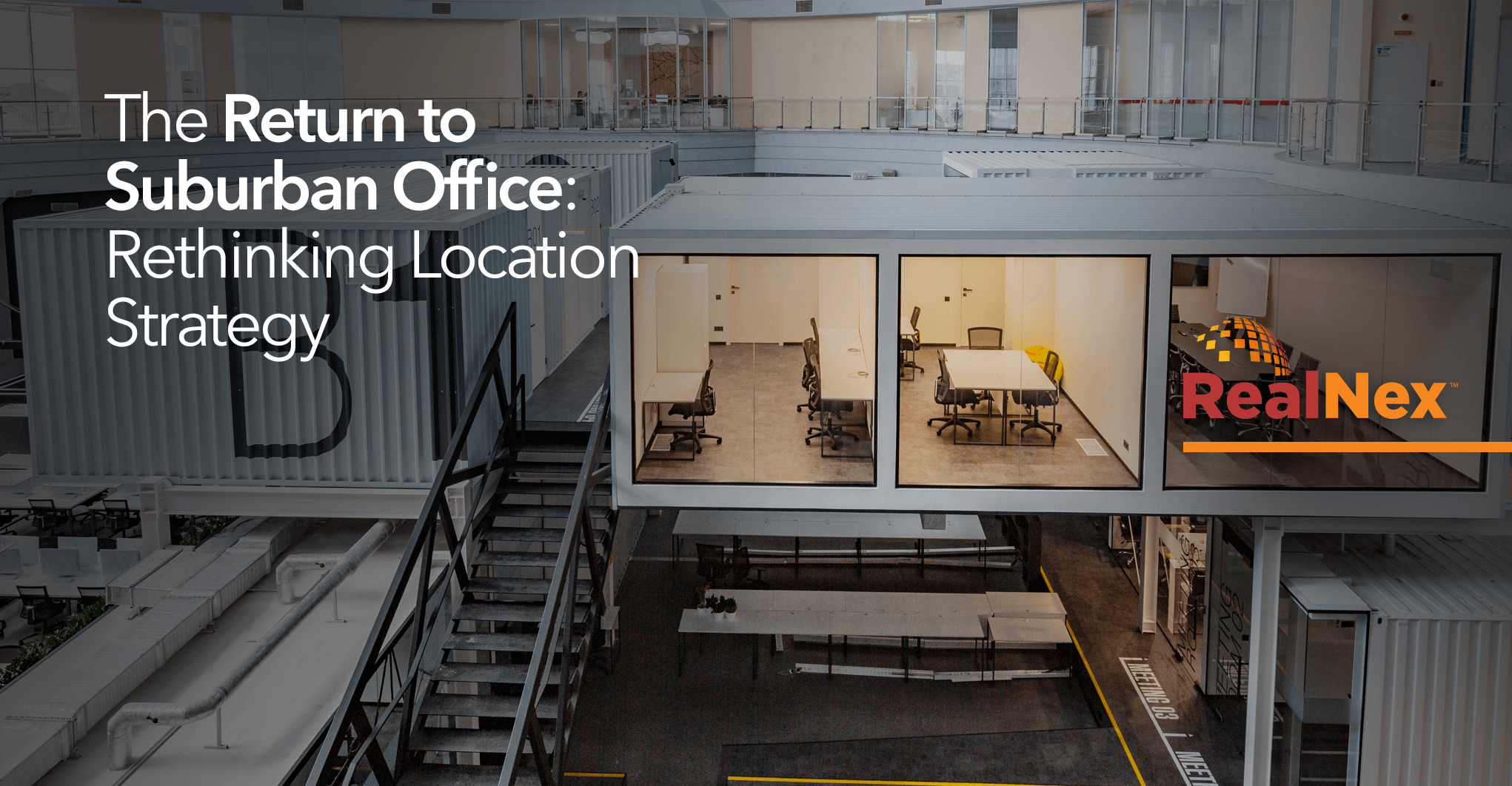
The Return to Suburban Office: Rethinking Location Strategy

Posted by RealNex on Apr 21, 2026 8:30:00 AM

For a while, it felt like suburban office space had lost its place in the conversation. The focus was on downtowns, trophy buildings, and dense urban cores. But lately, something interesting has been happening. Suburban offices are quietly working their way back into favor, and not just as a fallback option.

This isn’t a full retreat from cities. It’s more of a recalibration. Companies are taking a closer look at how their teams actually work and where it makes sense to be located. In many cases, suburban offices are starting to check a lot of boxes.

Why Suburban Offices Are Back on the Radar

One of the biggest drivers is flexibility. As hybrid work settles in, companies don’t always need a massive central headquarters. What they do need is space that’s convenient, affordable, and easy for employees to access a few days a week.

For many workers, that means avoiding long commutes into a central business district. Suburban offices, especially those located near residential areas, can often significantly reduce travel time for employees and improve their work-life balance. That convenience matters, especially if you’re in a competitive market.

Cost plays a role, too. Suburban rents are often more predictable and manageable than central business district pricing, especially when you factor in additional costs such as parking, operating expenses, and build-out costs. For companies watching budgets closely, that difference can be meaningful.

A Different Kind of Office Demand

What’s interesting is that tenants moving toward suburban locations aren’t looking for the same kind of space they leased ten years ago. The demand is shifting toward smaller footprints, cleaner layouts, and buildings that feel modern without being excessive.

What today’s tenants seem to care about most isn’t hype; rather, it’s how a space fits into their everyday life. Suburban offices with features such as natural light, decent common areas, and reliable tech are doing well, especially when there’s a gym or coffee spot nearby. Add a walking trail, and that’s even better. These buildings aren’t built to be the most exciting or flashy on the block. Instead, they’re designed to make your life easier.

How This Shift Affects Development and Investment

Developers and investors are taking notice of these trends, too. In many markets, we’re seeing developers choosing to revive older office parks, rather than building new construction from the

From an investment perspective, suburban office can make sense when the numbers are right, too. These properties tend to come with lower operating costs and tenants who stick around longer. Sectors like professional services and healthcare groups still need physical space, and they often value stability over prestige. And when you’re trying to plan in a market that can be anything but predictable, that kind of stability goes a long way.

What This Means for Brokers

For brokers, the return to suburban office is less about selling a location and more about helping tenants think through strategy. Many companies are weighing multiple scenarios: stay urban, move suburban, split locations, or adopt a hub-and-spoke model.

That’s where brokers can add real value, by asking the right questions. How often will employees be in the office? Where do they live? What kind of space actually helps support collaboration without feeling wasted and empty?

Matching tenants with the right location mix takes more nuance than it used to. It also takes organization. Tracking multiple site options, comparing markets, and managing longer decision timelines can get complicated quickly. Using tools like RealNex helps brokers keep that process clear and coordinated, especially when deals involve tradeoffs rather than obvious answers.

Not a Trend, But a Reassessment

The renewed interest in suburban office space isn’t about taking a step backwards. It’s about adjusting to how work has changed. Companies are being more intentional about where they put their people and why.

For brokers who understand that shift and can help clients navigate it thoughtfully, the suburban office market is becoming less of a second choice and more of a strategic one.

RealNex is a CRM tool that can be used by commercial real estate professionals to work more efficiently and improve their productivity. At RealNex, we offer an incredibly powerful, yet amazingly simple, end-to-end solution. To learn more about RealNex and see samples of the products that we offer, visit our website. When you are ready to experience the RealNex difference for yourself, schedule a demo or contact us today. We’d love to talk with you!
Read More

Topics: CRE, CRE Tech, CRM, Real Estate Technology, CRE Marketing, proptech, visualization, 3D VR, mixed use, adaptive reuse, video

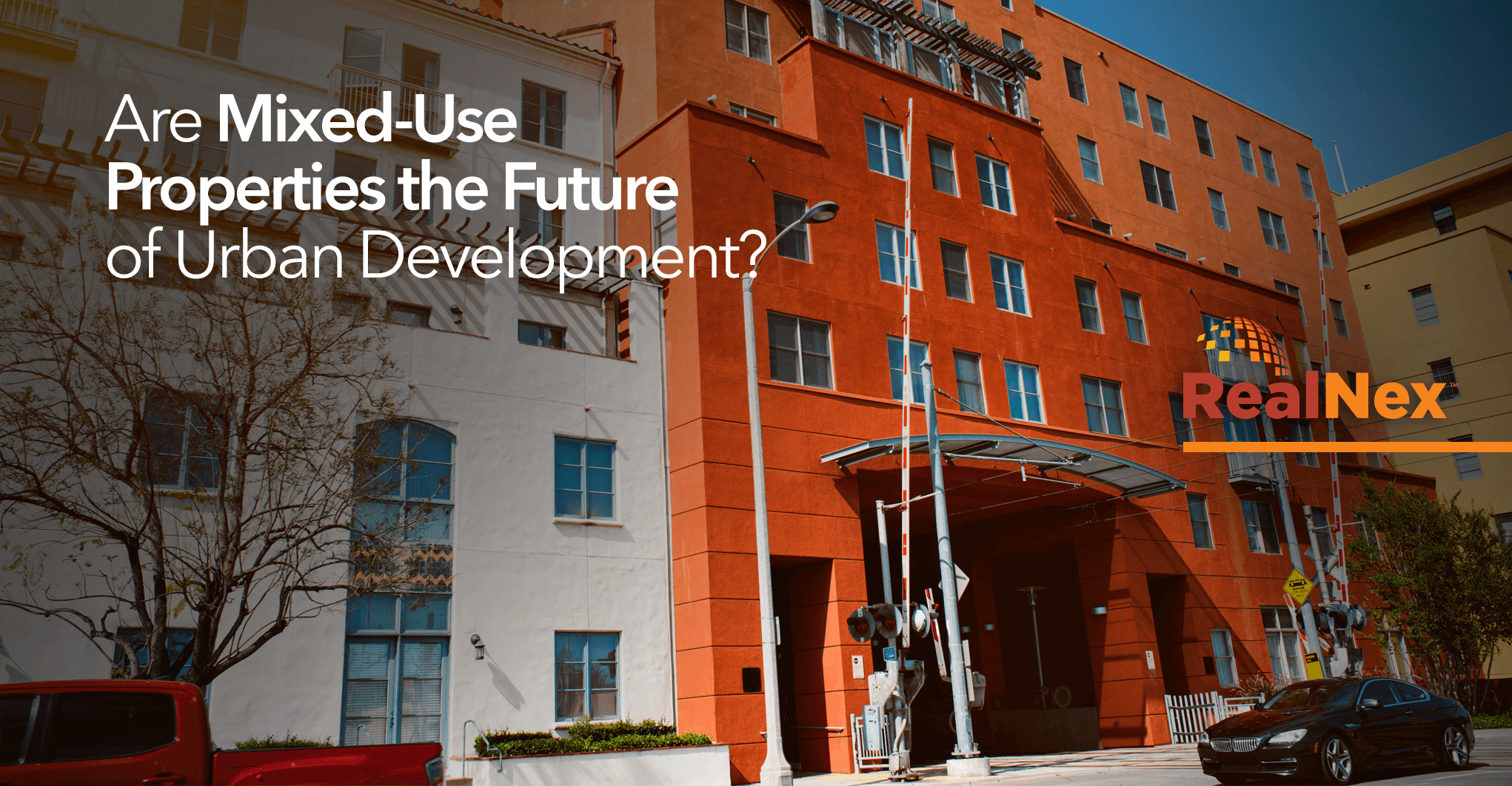
Are Mixed-Use Properties the Future of Urban Development?

Posted by RealNex on Apr 14, 2026 8:00:00 AM

If you have spent any time in growing cities, you’ve probably started to notice a pattern. New developments aren’t just office buildings anymore. They’re not just apartments, and they’re definitely not just retail. More often than not, they’re a mix of everything, including places where people can live, work, eat, shop, and gather without getting in a car.

That’s the idea behind mixed-use development, and it’s quickly becoming one of the most talked-about trends in urban commercial real estate.

At a basic level, mixed-use properties combine two or more uses—such as residential, office, retail, hospitality, or entertainment—into a single project or connected campus. But what’s driving the momentum isn’t just design. It’s how people actually want to live and do business today.

Why Mixed-Use Is Gaining Traction

Urban residents and businesses are valuing convenience more than ever. Things like long commutes, isolated office parks, and single-purpose districts feel outdated in cities where space is limited and time is precious. Mixed-use developments respond to that reality by bringing daily needs closer together.

For businesses, this kind of environment can be a real draw. Office tenants like being located near restaurants, housing, and transit. Retailers benefit from built-in foot traffic. Residential tenants appreciate having services and amenities within walking distance. When it works well, everyone feeds off the same ecosystem.

There’s also a resilience factor. Properties that rely on just one type of tenant can struggle when demand shifts. Mixed-use developments tend to spread that risk. If office leasing slows, residential or experiential retail may help stabilize the property. That balance is appealing to investors looking for long-term durability.

The Challenges Behind the Scenes

Of course, mixed-use isn’t a magic solution. These projects are complicated. Different uses come with different lease structures, operating requirements, and tenant expectations. Zoning approvals can take time. Construction costs are often higher. And managing a property with multiple uses requires more coordination than a traditional single-asset building.

From a leasing standpoint, timing matters too. Bringing the right mix of tenants online in the right sequence can make or break a project. A great restaurant opening too early (or too late) can struggle if the surrounding uses aren’t active yet.

That’s where careful planning, realistic underwriting, and strong market knowledge become critical.

How Brokers Fit Into the Picture

For brokers, mixed-use developments change the nature of the job. Instead of focusing on one asset class, brokers are often working across several at once. They’re helping owners think about tenant mix, not just individual vacancies. They’re explaining how one lease decision can affect the entire property.

This kind of work leans more toward advisory than transactional. Brokers who understand how different uses interact and can communicate that story clearly, bring real value to developers and investors navigating complex projects.

Technology also plays a role here. Managing multiple tenant types, tracking prospects, and keeping deals organized across a mixed-use property requires solid systems. Platforms like RealNex help brokers stay organized and informed as these projects move from concept to reality.

Looking Ahead

Are mixed-use properties the future of urban development? Maybe not the only future, but they’re certainly a big part of it.

As cities grow denser and expectations continue to shift, developments that blend uses, create community, and offer flexibility are likely to stay in demand. For commercial real estate professionals, understanding how these projects work and how to support them will only become more important in the years ahead.

RealNex is a CRM tool that can be used by commercial real estate professionals to work more efficiently and improve their productivity. At RealNex, we offer an incredibly powerful, yet amazingly simple, end-to-end solution. To learn more about RealNex and see samples of the products that we offer, visit our website. When you are ready to experience the RealNex difference for yourself, schedule a demo or contact us today — we’d love to talk with you!

Read More

Topics: CRE, CRE Tech, CRM, Real Estate Technology, CRE Marketing, proptech, visualization, 3D VR, mixed use, adaptive reuse, video

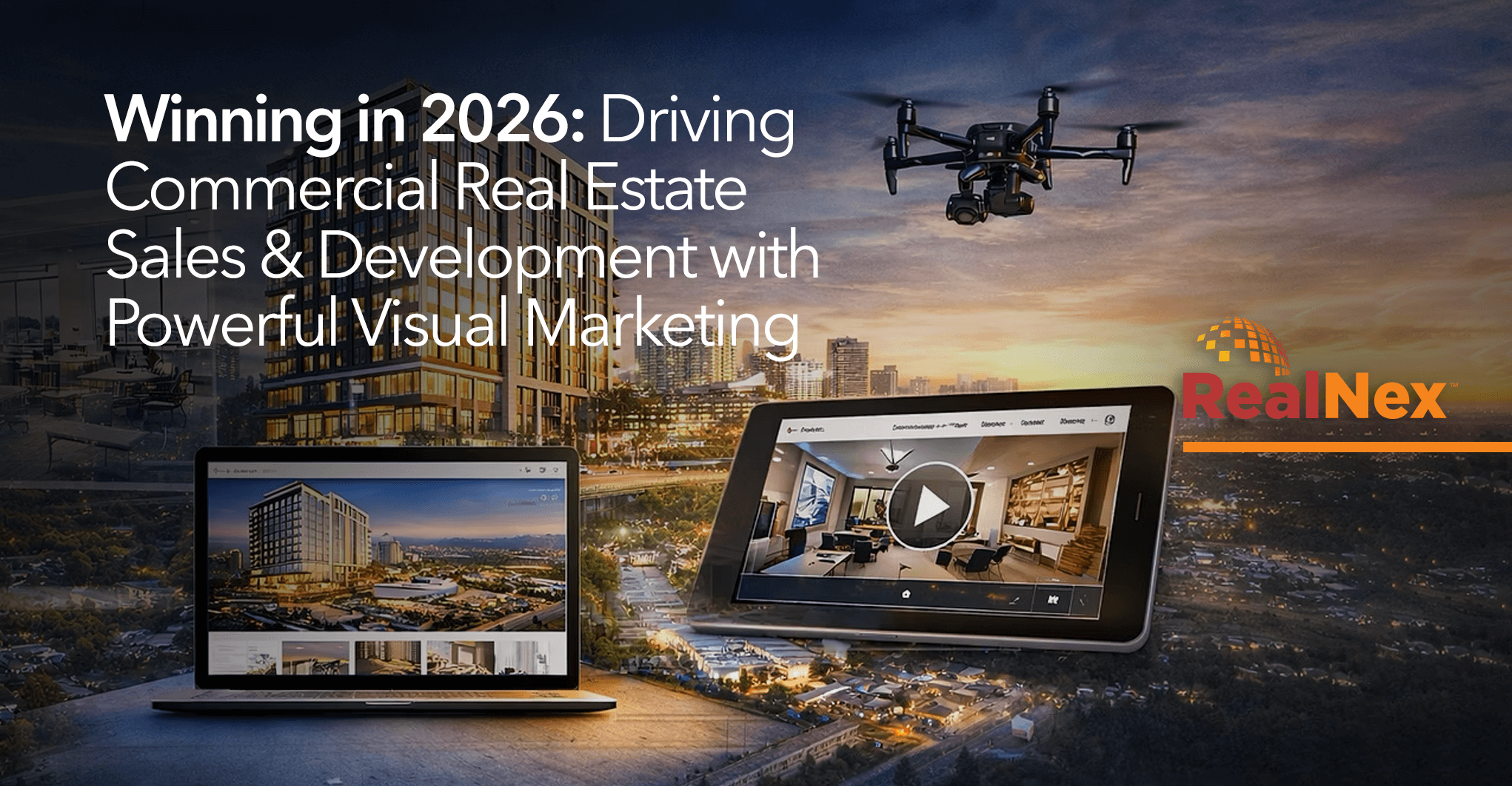
Winning in 2026: Driving Commercial Real Estate Sales & Development with Powerful Visual Marketing

Posted by RealNex on Jan 28, 2026 11:23:32 AM

Introduction:

In 2026, commercial real estate success requires more than listings, floor plans, and static imagery. Brokers, developers, owners, and investors who win are those who use immersive visual marketing to communicate value instantly, build confidence early, and move deals forward faster.

Today’s buyers, tenants, and capital partners evaluate more opportunities remotely and earlier in the funnel. If value isn’t immediately clear, attention is lost — and so is momentum.

RealNex-VR delivers a complete suite of commercial real estate visual solutions designed to elevate every stage of sales and development, from concept to close.

The 2026 CRE Estate Marketing Challenge

The commercial real estate market is more competitive — and more compressed — than ever. Buyers and tenants evaluate more properties in less time, often remotely, and make decisions earlier in the process.

Key challenges CRE professionals face:

  • Limited attention from investors and tenants

  • Visually sophisticated competition

  • Longer sales cycles driven by uncertainty

  • Pressure to justify value before in-person tours

Listings with video and 3D Tours generate 49% more inquiries than listings without them (LoopNet). In a market where attention is limited, even strong assets get skipped when the value isn’t immediately clear.


Why Traditional Marketing Is No Longer Enough

Static photography and basic floor plans still matter — but they no longer tell the full story. They fail to:

  • Communicate scale, flow, and spatial relationships

  • Provide environmental and location context

  • Support remote decision-making with confidence

As a result, prospects often move on before fully understanding a property’s potential.

"If prospects can’t quickly understand a property’s value, they won’t wait around to figure it out.”


The Power of Visual Marketing in CRE

High-impact visual marketing transforms how properties are understood and evaluated.

Effective CRE visuals:

  • Reduce friction in the decision-making process

  • Answer key questions before they’re asked

  • Increase engagement and time spent reviewing assets

  • Elevate credibility and perceived value

Listings with high-quality visuals (including 3D Tours and Aerial Videos) receive 2× more engagement than those with static images alone (CoStar).  This shift isn’t cosmetic — it directly influences deal velocity and deal quality.


Visual Solutions That Drive Results

Virtual tours allow stakeholders to explore properties on their own time, from anywhere — accelerating understanding and alignment.

Key benefits:

  • Fewer unqualified site visits

  • Better-prepared prospects

  • Faster internal and external consensus

RealNex’ Virtual Tours transform properties into immersive, self-guided experiences that support pre-leasing, pre-sales, and remote decision-making.

Explore the Virtual Tour → Walk the space remotely in under 60 seconds.

Property Videos & Cinematic Storytelling

Cinematic property videos communicate scale, flow, and narrative — far beyond what photos alone can achieve.

What video delivers:

  • Faster engagement with listings

  • Clear understanding of layout and usage

  • Stronger emotional connection to the asset

RealNex’ Property Video Tours combine guided storytelling with professional visuals to help brokers differentiate listings and help investors quickly grasp opportunity.

Watch the Property Video → See flow, features, and positioning fast.

Aerial & Drone Media

Aerial visuals provide instant geographic and contextual clarity that ground-level imagery can’t.

They highlight:

  • Access points and circulation

  • Surrounding amenities and development

  • Site scale and market positioning

RealNex’ Aerial Video Tours turn location into a strategic advantage.

LoopNet reports that aerial video tours increase engagement by 40%, helping prospects evaluate location context and surrounding amenities faster.  This is especially valuable when site selection, access, and neighborhood positioning are key decision drivers.


Watch the Aerial Tour → Understand location context instantly.

3D Renderings & Pre-Construction Visualization

For development and repositioning projects, visuals are often the only way to sell the vision.

Renderings help teams:

  • Secure pre-leasing commitments

  • Align internal stakeholders

  • Support entitlement and investor presentations

RealNex’ 3D Renderings bring clarity, credibility, and momentum to projects before they exist.

NAIOP research shows that pre-construction marketing using Virtual Tours and Renderings can boost pre-leasing rates by 40%.  For developers, this turns visual storytelling into measurable leasing momentum before delivery.


RealSite™: One Platform. One Competitive Edge.

RealSite™ unifies all our visual solutions into a single, web-delivered property experience. Virtual tours, renderings, video, and aerial media live in one branded destination — keeping prospects focused and engaged.

For brokers, RealSite simplifies marketing.

For developers, it centralizes communication.

For owners and investors, it delivers clarity and confidence — faster.


View a RealSite Experience → Everything in one shareable destination.

How RealNex-VR Supports Every Stage of the Lifecycle

Concept & Planning

  • 3D renderings

  • Site context visualization

Marketing & Leasing

  • Virtual tours

  • Property videos

  • Aerial media

Sales & Investment

  • Investor-ready presentations

  • Branded, consistent visual assets

A Smarter Way to Succeed in 2026

In a market defined by limited attention and high expectations, visual clarity separates leaders from laggards. Individually, each RealNex-VR solution enhances marketing. Together, they form a comprehensive visual strategy that accelerates sales, shortens leasing cycles, and elevates perceived value.

Visual marketing is no longer an enhancement — it’s infrastructure.

Next Steps — Elevate Your Marketing Strategy

If you’re preparing for sales, leasing, or development in 2026, now is the time to rethink how your properties are presented.

RealNex-VR helps CRE professionals:

  • Stand out in competitive markets

  • Accelerate decision-making

  • Close deals with confidence

Schedule a Visual Marketing Consultation !

Read More

Topics: CRE, CRE Tech, CRM, Real Estate Technology, prospecting, CRE Marketing, proptech, visualization, 3D VR, adaptive reuse, video

Subscribe to Email Updates

Recent Posts

Posts by Topic

see all